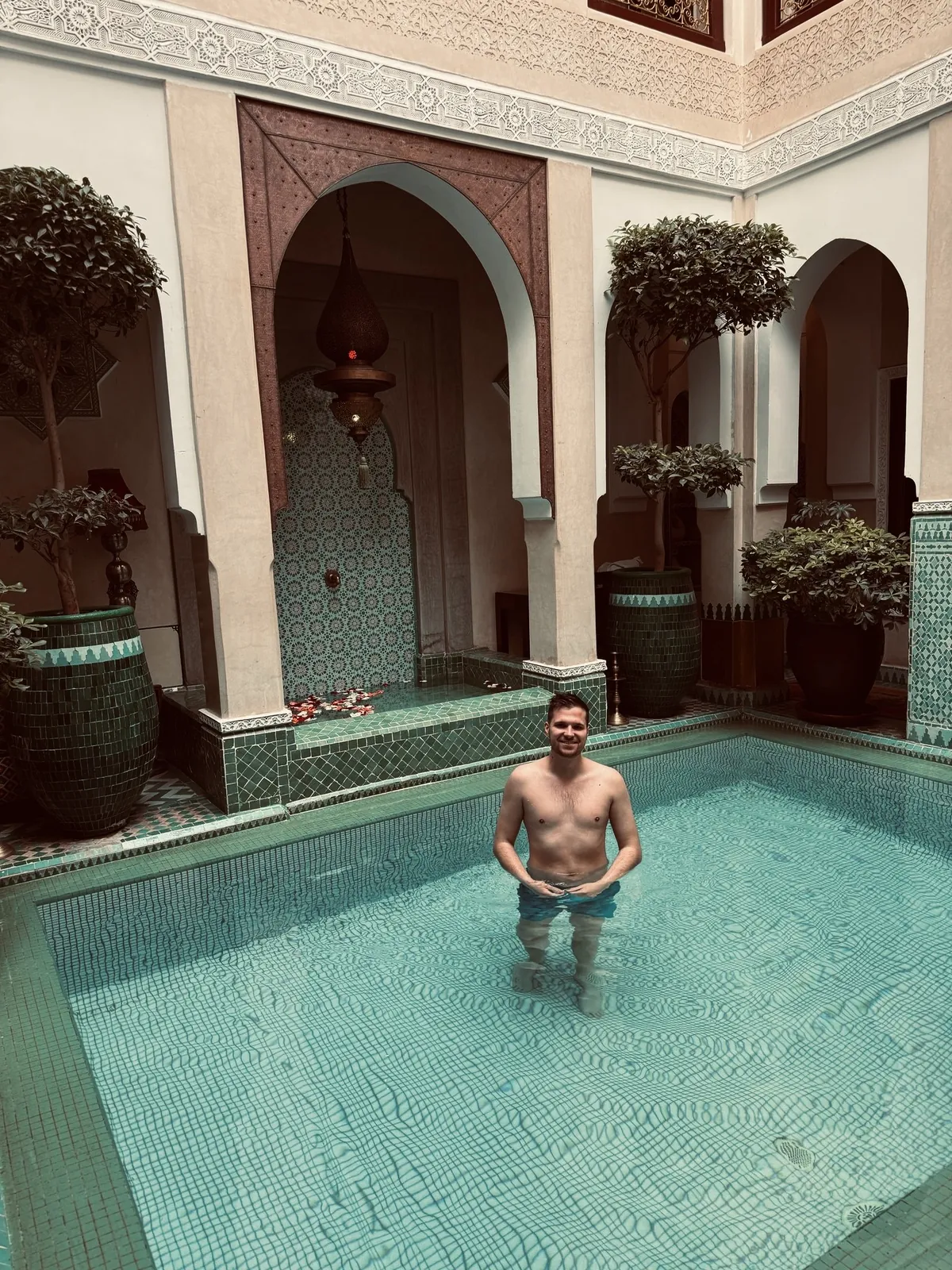
Marrakech is loud, colourful and exhausting – and then you walk through an unassuming door and find yourself in a riad. Silence, a pool in the courtyard, tiles in every colour, plants in big pots. I was there in April 2025, and that switch between chaos and calm is what stays with you.
The riad effect
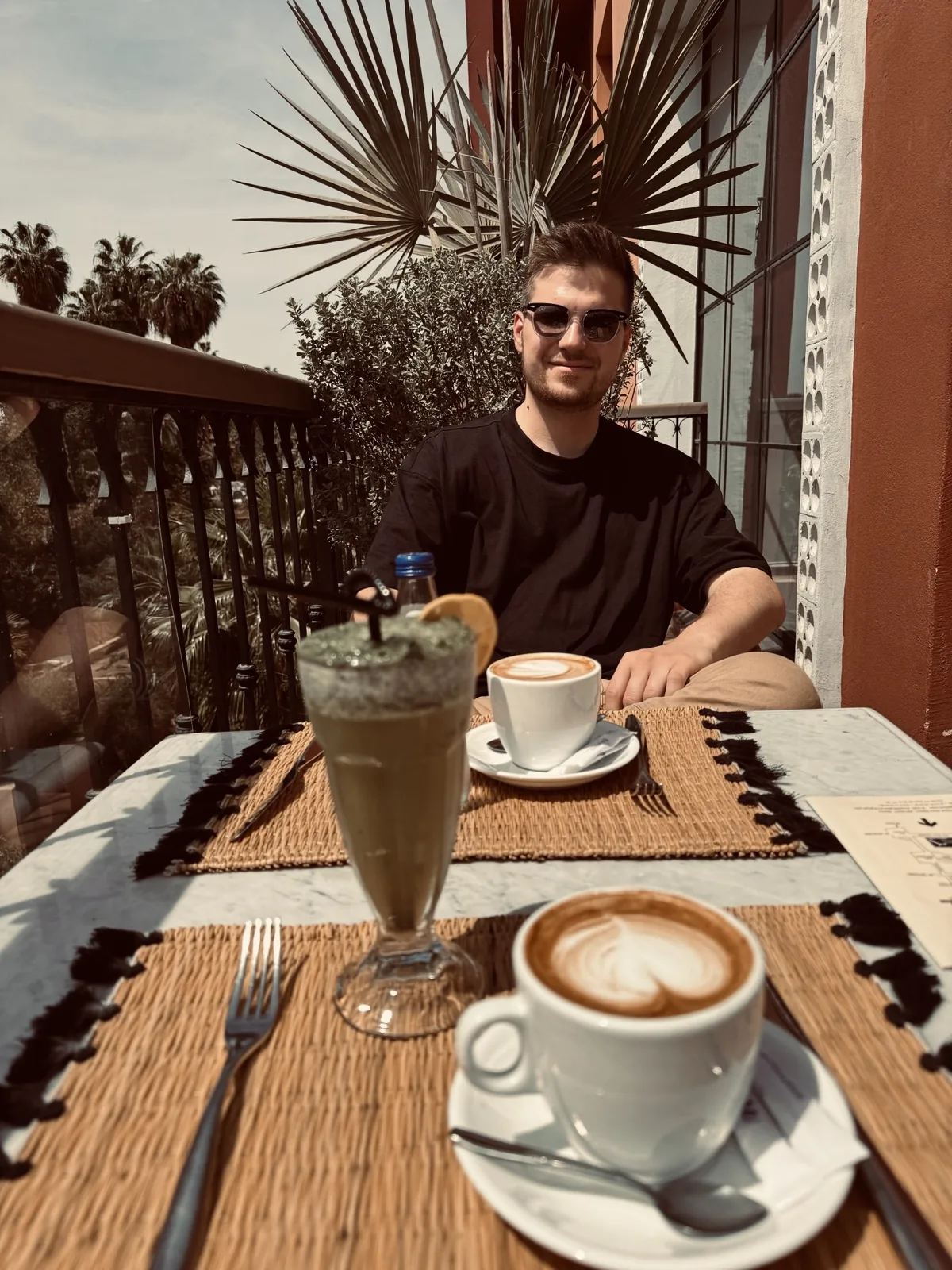
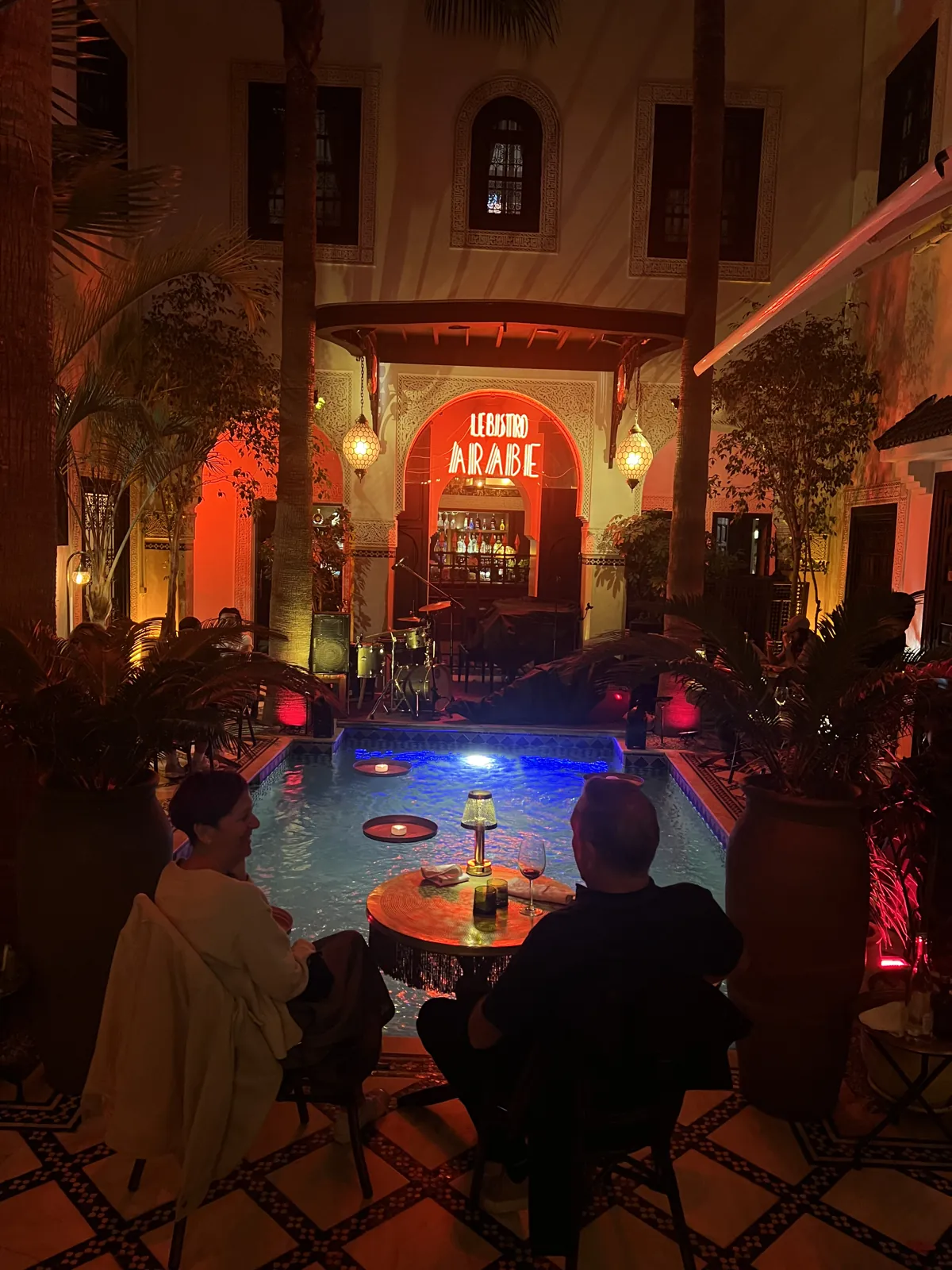
A dip in the courtyard pool during the day, coffee and a shake on a terrace under palm trees at lunchtime. And in the evening a candlelit courtyard, the pool glowing, conversations getting quieter. Outside the medina is raging – inside, hardly any of it reaches you.
Jemaa el-Fna
Just a few minutes' walk away is Jemaa el-Fna, the city's most famous square. In the evening: food stalls, musicians, storytellers and one big swirl. UNESCO protects the square as a cultural space – not because of a building, but because of the people who fill it every night.
What makes Morocco special
Mint tea, jokingly called "Berber whisky" here, souks where haggling is part of the deal, and a culture where Arabic, Amazigh (Berber) and French exist side by side. Marrakesh's walls are made of red earth - which is why it is called the "Red City".
A little history
Marrakesh was founded in 1070 by the Almoravid dynasty and was so important that the whole country was named after it: Morocco. The minaret of the Koutoubia Mosque dates from the 12th century, and to this day no building in the medina may be taller. Since 2001 Djemaa el-Fna square has been part of UNESCO's intangible cultural heritage - because of its storytellers, musicians and performers.
My tip
Stay in a riad, not in a concrete hotel on the outskirts. The contrast between the bustle outside and the calm inside is the real experience. And head into the souks without a plan – getting lost is part of it.
Tip: Find tours in Marrakech here on GetYourGuide – 5% cheaper with the code HIDDENGEMATLAS5. (Ad)