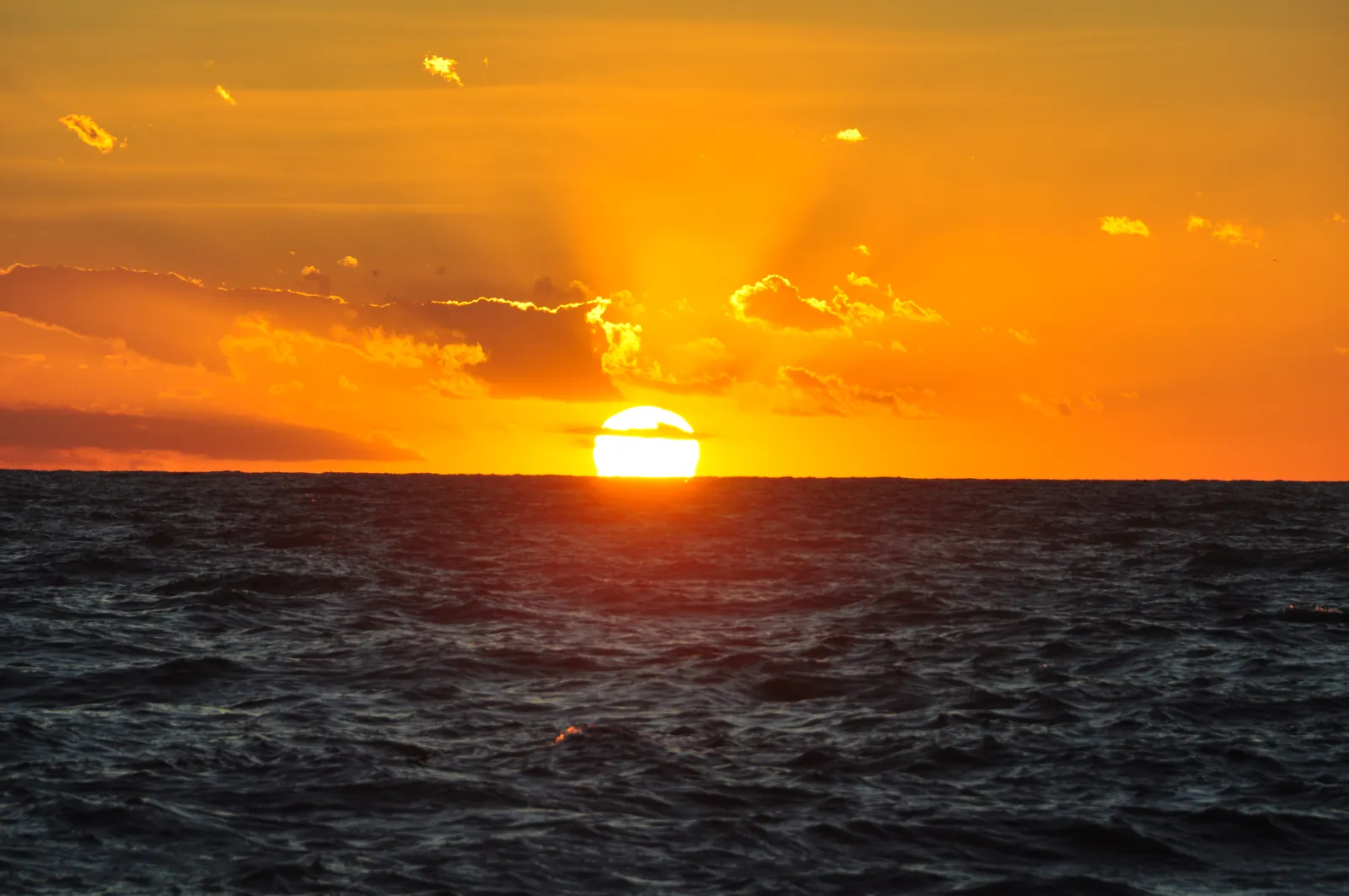
A week in Pula in October 2025 – and by the end I had more photos of sunsets than of the Arena. Which is funny, because Pula has one of the best-preserved Roman amphitheatres in the world. Not somewhere outside town, but right in the middle of it, between a traffic light and a bus stop.
The Arena: 2,000 years old and not remotely a museum
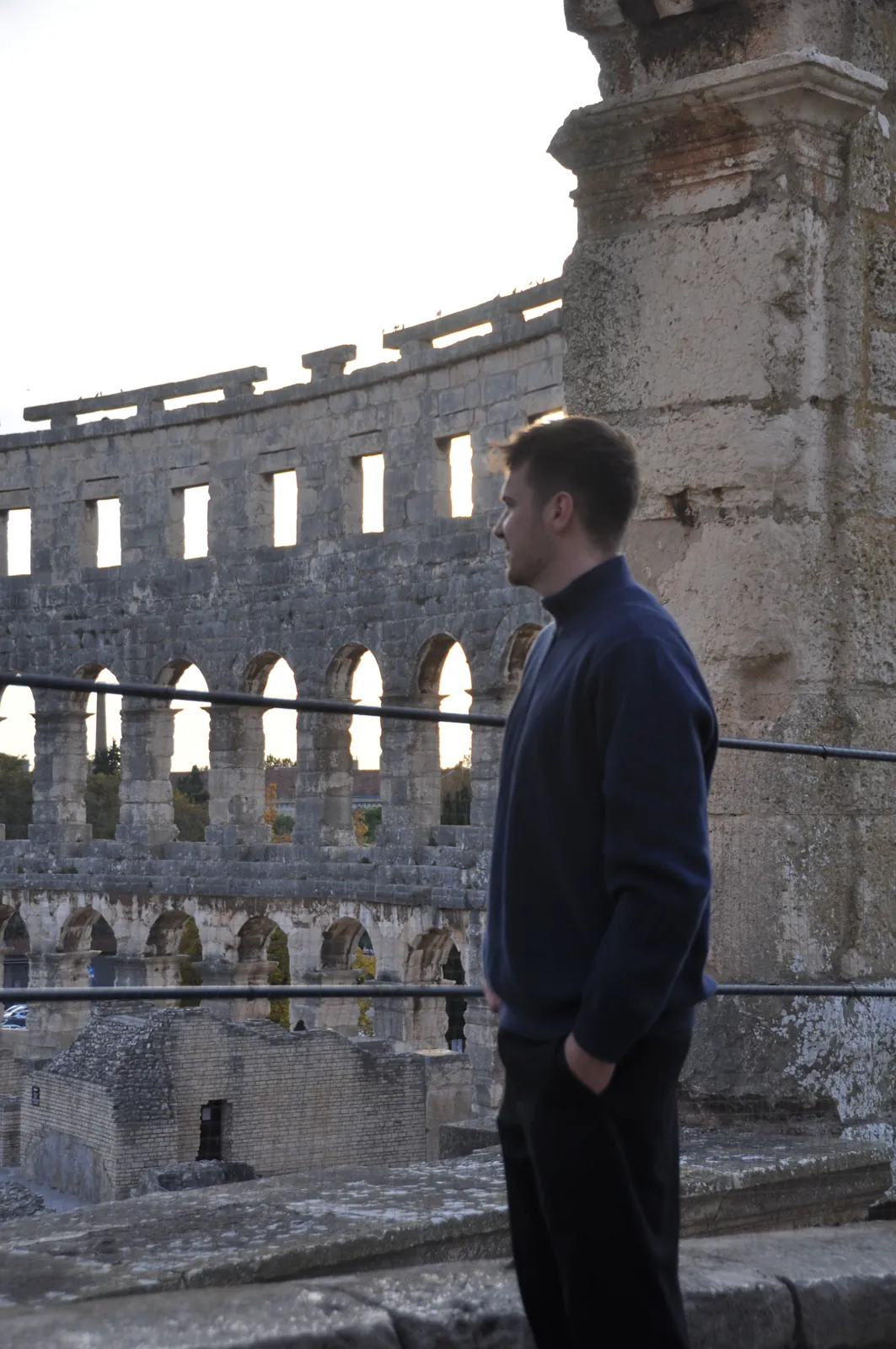
Built in the 1st century, back when Rome still had emperors – and yet it doesn't feel like an exhibit. I stood between the arches, the last light falling through the upper windows, while everyday life carried on below. At night it's lit up, and it looks as if someone moved the Colosseum to the Adriatic.
The sundowner I didn't see coming
Right next to the Arena, a DJ was playing on a terrace while the sun disappeared behind the rooftops. Antiquity behind you, beats in your ears. That mix is exactly what Pula is about.
Coffee on the Forum, fish in the market hall
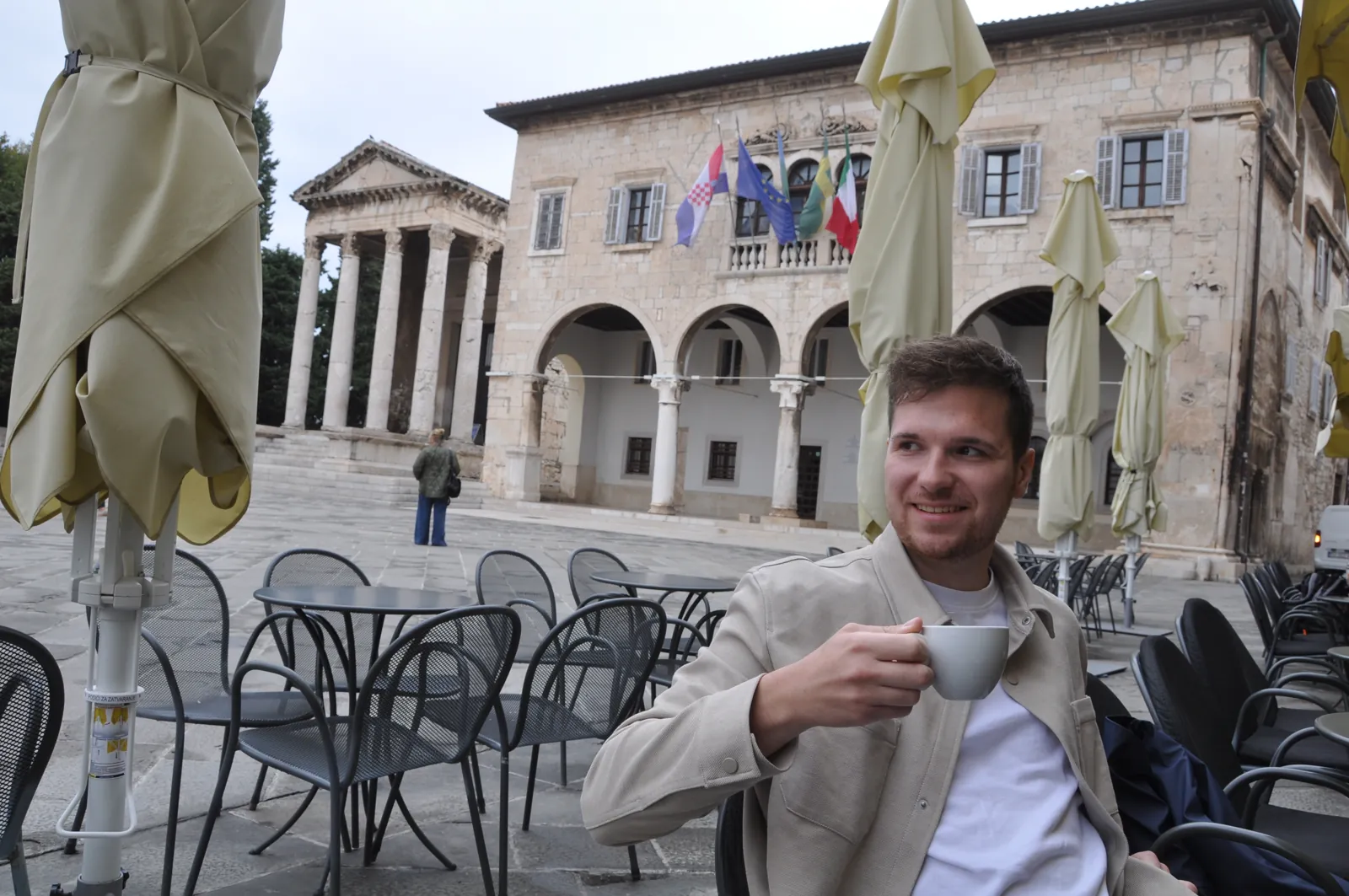
The old Roman Forum is now a square lined with cafés. I sat there with a coffee, right opposite the Temple of Augustus – it has been standing for around 2,000 years and has seen more guests come and go than any hotel in town. A few streets away, the catch of the day lies on ice in the market hall, with oranges piled up outside. And tucked away in the old town is a quiet cloister full of roses where you forget there's a city outside.
Verudela: rocks instead of sand
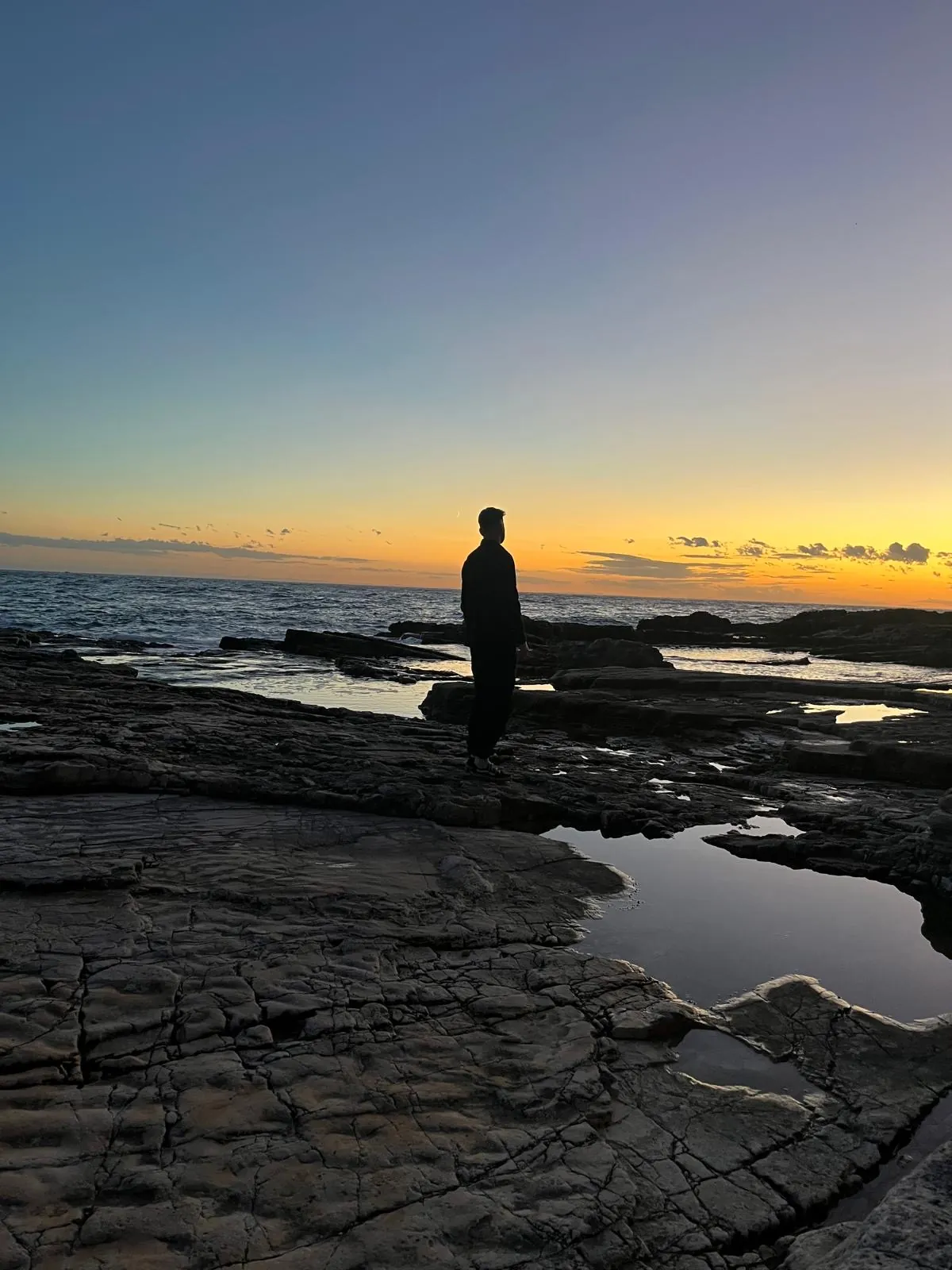
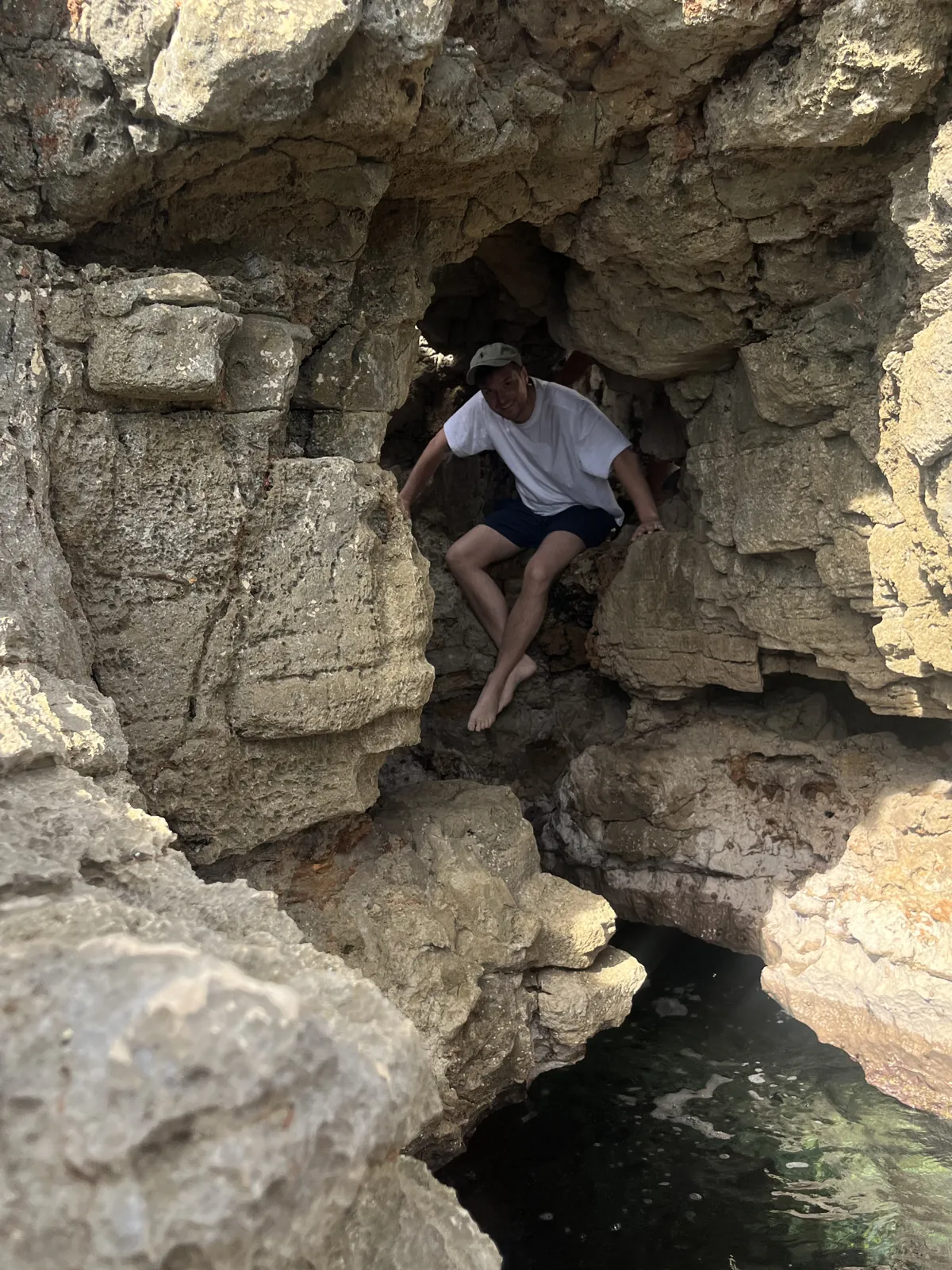
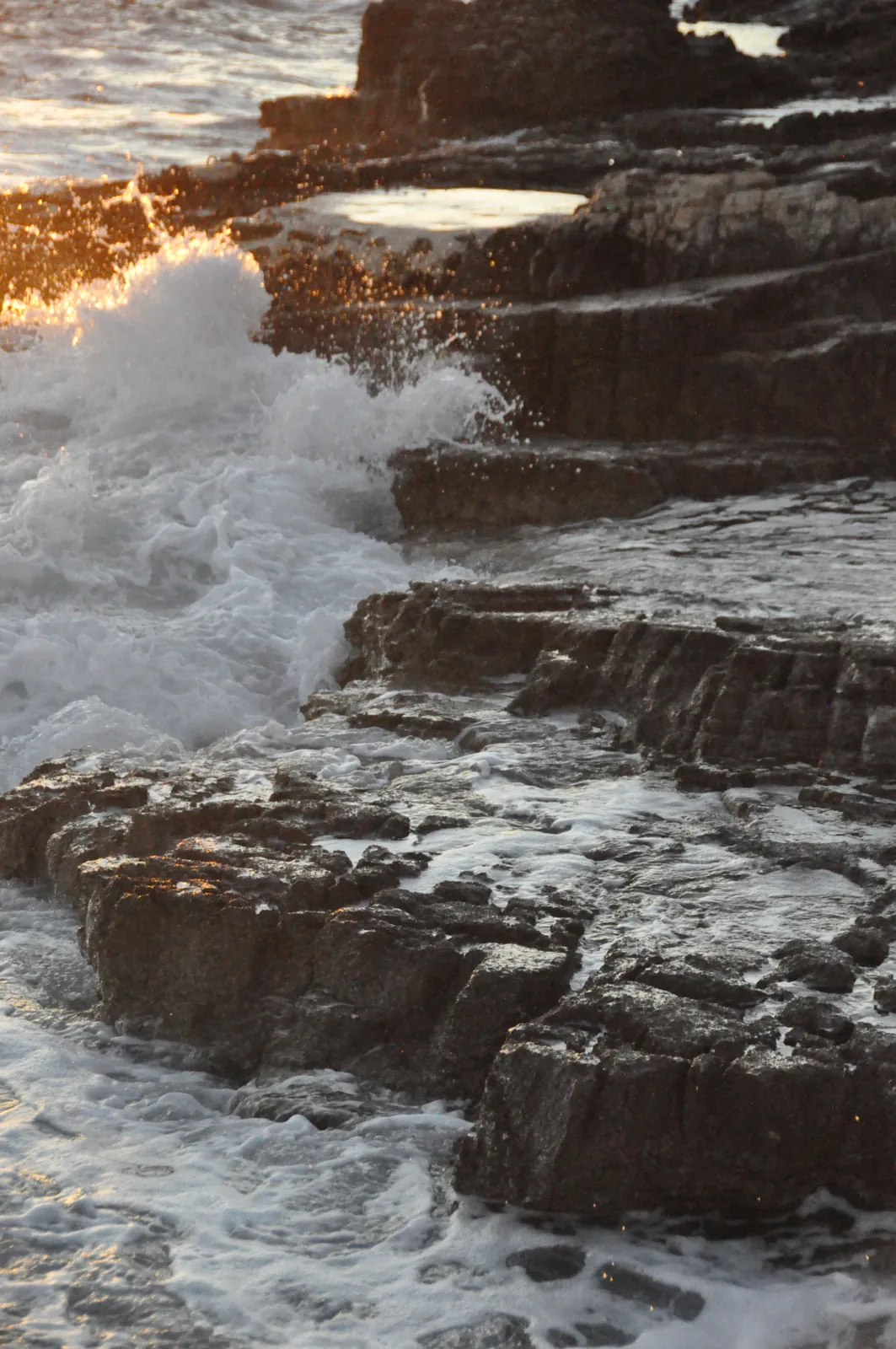
I spent the rest of the week on the coast. Flat rocks instead of sandy beaches, waves crashing against the stones, and evenings when the sky turns orange and then violet. I climbed into a hole in the coastal rocks simply because it was there. And on the last evening I stood on the rocks until only my silhouette was left.
What makes Istria special
Istria is bilingual - place signs in Croatian and Italian - and you can taste it too: truffles from the forests around Motovun, olive oil, Malvazija wine. Inland stands Hum, which calls itself the smallest town in the world, with around 30 inhabitants.
A little history
The Romans made Pula a colony, and the Arena was built in the 1st century. Later Venice ruled, and in the 19th century Pula became the main naval port of the Austro-Hungarian navy. In 1904/05 James Joyce taught English here. After the Second World War the city passed from Italy to Yugoslavia, and since 1991 it has been part of Croatia.
My verdict
Pula isn't a place to tick off. Half a day for the Romans, the rest for the sea. If you only see the Arena, you've missed Pula. Plan your sunsets like appointments – the rocky coves at Verudela are just a few kilometres south of the old town.
Tip: Find boat trips and excursions around Pula here on GetYourGuide – 5% cheaper with the code HIDDENGEMATLAS5. (Ad)