🇩🇪 Black Forest Guide: 12 places – High Road, Triberg, Gengenbach & gorges
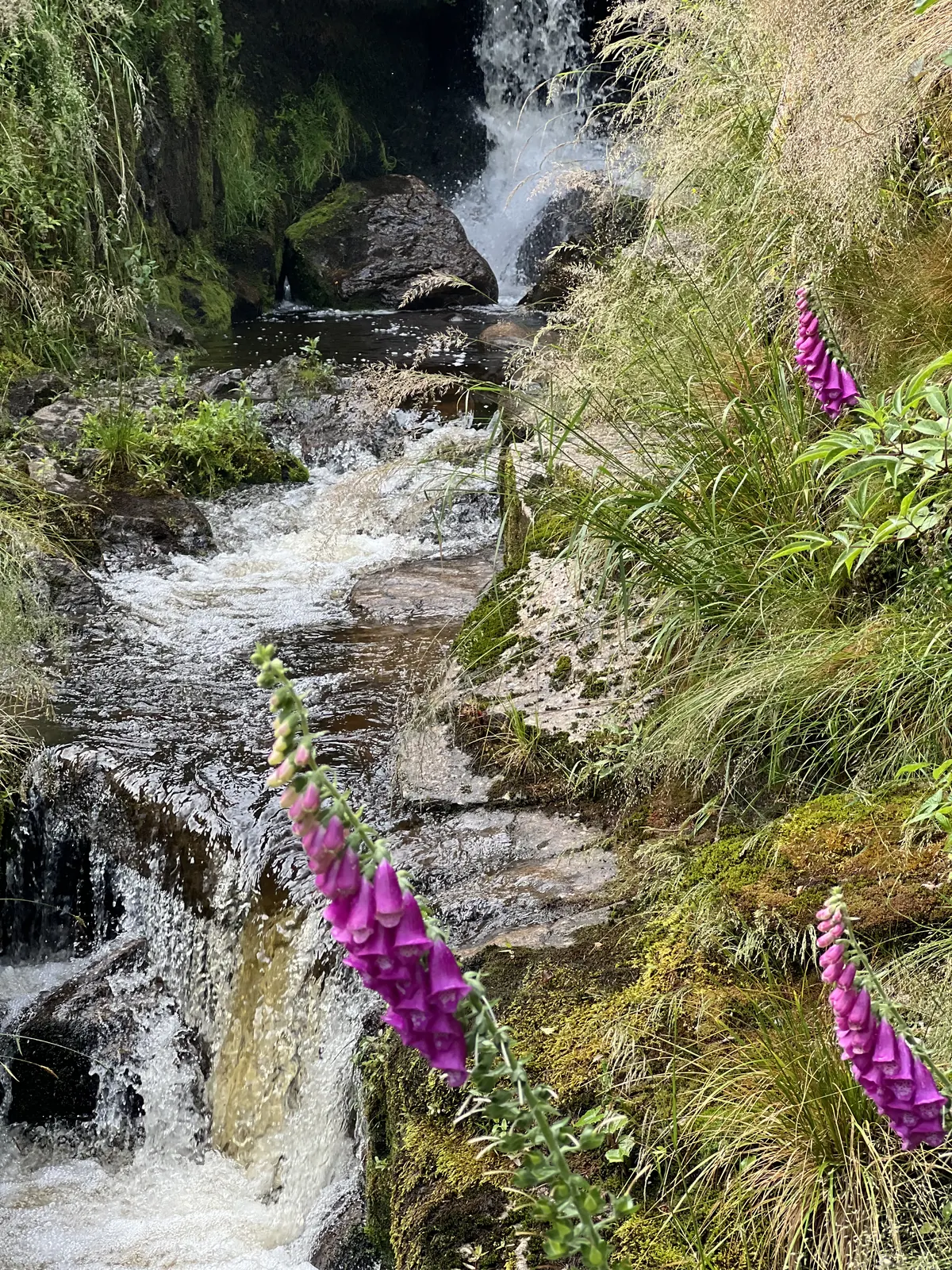
Table of contents
The Black Forest is forest, half-timbering and cuckoo clocks. Prices and times are guidelines (2026).
🗺️ Map: 12 places at a glance
My story in Black Forest
My tip: the Schwarzwaldhochstraße with a stop at the Mummelsee.
This guide contains affiliate links (GetYourGuide, Omio). If you book through them I earn a small commission – you never pay a cent more. Prices and opening hours change – double-check before you go.
🆓 Free things to do
5 places in Black Forest you can enjoy without an entry fee or completely free (for some, only a part costs extra, e.g. a tower or museum):
At a glance
Getting there and around
A car is practical for the Black Forest; Freiburg is a good base.
The Black Forest is large – a car gives you the most freedom, especially for the High Road and the valleys. By train you reach Freiburg, Baden-Baden, Titisee-Neustadt and Triberg well; the Höllental railway between Freiburg and Titisee is an experience in itself.
Many accommodations give you a guest card (e.g. the KONUS card) with which you can use buses and trains in the region free of charge – ask about it when booking. Winter tyres are mandatory at higher altitudes from October to April.
1. Must-sees
Schwarzwaldhochstraße & Mummelsee🆓 Free to experience
The panoramic road with a stop at the Mummelsee.
The Black Forest High Road (B 500) leads from Baden-Baden to Freudenstadt and is one of Germany’s oldest holiday roads. Over about 60 kilometres it runs at heights of roughly 800 to 1,000 metres through forest, moor and heath, with viewpoints, car parks and hiking trails by the roadside.
Lake Mummelsee at about 1,000 metres is a cirque lake surrounded by many legends: mummels (water nymphs) are said to live here, and a lake king is said to dwell in the water. At the lake there are pedal boats, cafés and souvenir shops – crowded in summer and on weekends, so come early or in the late afternoon. A lap around the lake is easy and takes about half an hour.
Tip: Go early in the morning or on a weekday – on summer weekends the road is busy.
Hornisgrinde – highest peak of the northern Black Forest
At around 1,160 metres the Hornisgrinde is the highest mountain in the northern Black Forest. You reach it from Lake Mummelsee on a hiking trail; at the top await a high moor with wooden boardwalks, heather and a lookout tower from which on clear days you see as far as the Vosges and the Rhine valley.
The moor is fragile – stay on the paths. The ascent from Mummelsee takes a good hour, depending on the route. Put on a jacket; it is almost always windy at the top.
Tip: Combine it with the Mummelsee stop and plan two to three hours.
Titisee & Feldberg🆓 Free to experience
Titisee is a glacial lake in the High Black Forest, surrounded by woods, with a promenade, cafés and excursion boats. In summer it is crowded and touristy – but a walk into the quieter side areas of the lake is worthwhile. Try Black Forest cake or a piece of cheesecake by the water here.
From Titisee you reach the Feldberg in about 30 minutes: at about 1,493 metres the highest mountain of the Black Forest. A cable car leads to the Seebuck with views, paths run across alpine pastures; in winter it is a ski area. Dress warmly, because it is much cooler at the top.
Tip: Start at the Feldberg early and drive to Titisee in the afternoon – it is still bearable there then.
Baden-Baden
The spa town on the edge of the Black Forest is known for its thermal springs, the casino and the elegant Lichtentaler Allee, a walkway along the Oos. In the Friedrichsbad you can experience the Roman-Irish bath; the Caracalla Spa is more modern with a panorama view. Both have house rules (for example swimwear-free in the Friedrichsbad) – inform yourself beforehand.
Baden-Baden is a good starting point for the Black Forest High Road and a relaxed complement to the hikes. Plan half a day to a full day; check prices and opening times in advance.
Tip: Start in Baden-Baden and drive the High Road the next morning.
2. Villages, clocks & tradition
Triberg: cuckoo clocks & Black Forest cake
Triberg is considered the capital of cuckoo clocks. In the shops and the Black Forest Museum you see the clocks that have been built in the Black Forest since the 18th century – from small wall clocks to giant specimens. Some businesses have workshops where you can see how the clocks are made.
The Black Forest cake is a must: sponge, cream, cherries and kirsch. Ask in the cafés for the traditional version with kirsch – it is the real one. Only buy clocks you really like; prices differ greatly between handmade and mass-produced clocks.
Tip: Combine waterfalls, clocks and cake in one day – everything is close together.
Gengenbach – half-timbered town💎 Hidden gem
Gengenbach in the Kinzig valley is a small half-timbered town with a market square, a town hall of 1784 and well-kept lanes. In December the town hall becomes the largest Advent calendar in the world: every evening a new window opens. Outside Advent the place is worth a quiet walk and wine from the surrounding slopes.
Here you notice how the Black Forest works even without mountains: vineyard slopes, fruit trees, half-timbered houses. Plan half a day and eat in a Straußwirtschaft (wine tavern) or an inn if you like.
Tip: In December come early and enjoy the atmosphere; otherwise on a weekend, when everything is open.
Vogtsbauernhof Open-Air Museum (Gutach)
In the open-air museum near Gutach stand original Black Forest farmsteads that were moved here. You see how families lived with livestock under one roof, how mills and sawmills worked and how cuckoo clocks came about. On certain days there are craft demonstrations.
Gutach is also home to the Bollenhut – the hat with red wool pom-poms that stands for the Black Forest. Plan two to three hours; check admission and opening times beforehand, the museum is open seasonally.
Tip: Plan it for a rainy day or a hot day – there is lots of shade and roofs.
3. Hidden gems
Triberg Waterfalls💎 Hidden gem
Squirrels eat out of your hand here – on my map.
The Triberg Waterfalls drop in seven stages a total of about 163 metres and count as one of Germany’s highest waterfall systems. A path with steps leads up beside the water; at several places you can feel the roar up close. Admission is charged (check prices beforehand).
In the forest around the falls live squirrels that are tame in some places. Bring a few hazelnuts – but feed them only suitable food, not bread or sweets. Good shoes make sense because the steps can be wet. Plan an hour.
Tip: Come early in the morning or late in the afternoon, then fewer people are there and the squirrels are more active.
Ravenna Gorge & Viaduct💎 Hidden gem🆓 Free to experience
Near Hinterzarten runs the Ravenna Gorge, a narrow gorge with waterfalls, small bridges and rocks. Spanning it is the Ravenna Viaduct, a high railway bridge on the Höllental line. The path through the gorge is shady and a lovely contrast to the sunny heights.
There are hiking trails of different lengths; hiking shoes make sense. With luck you see a train crossing the viaduct. Plan one to two hours – this is a quieter tip away from the big destinations.
Tip: Go in the morning – then the path is empty and the sun shines into the valley.
Wutach Gorge – wilderness in the southern Black Forest💎 Hidden gem🆓 Free to experience
The Wutach Gorge counts as one of Germany’s wildest gorges: a hiking trail along the river through rock, forest and gorge sections. The path is partly narrow and secured; if you want to hike you need sure-footedness, sturdy shoes and time, because the routes take several hours.
The gorge is a nature reserve – stay on the paths and take litter with you. Inform yourself beforehand about closed sections, especially after rain or in winter.
Tip: Start early, take water and snacks and check closed sections beforehand.
Treetop Walk Bad Wildbad
The treetop path in Bad Wildbad runs for about 1.25 kilometres in the tree crowns, accompanied by a spiral tower that takes you up to about 40 metres. From above you see over the northern Black Forest; information boards explain animals and trees.
The path is built step-free and works well with children. Admission and opening times change, so please check beforehand. It is best combined with a walk in the village or a visit to the spa.
Tip: Come in the morning and combine it with the High Road.
Menzenschwand waterfalls💎 Hidden gem🆓 Free to experience
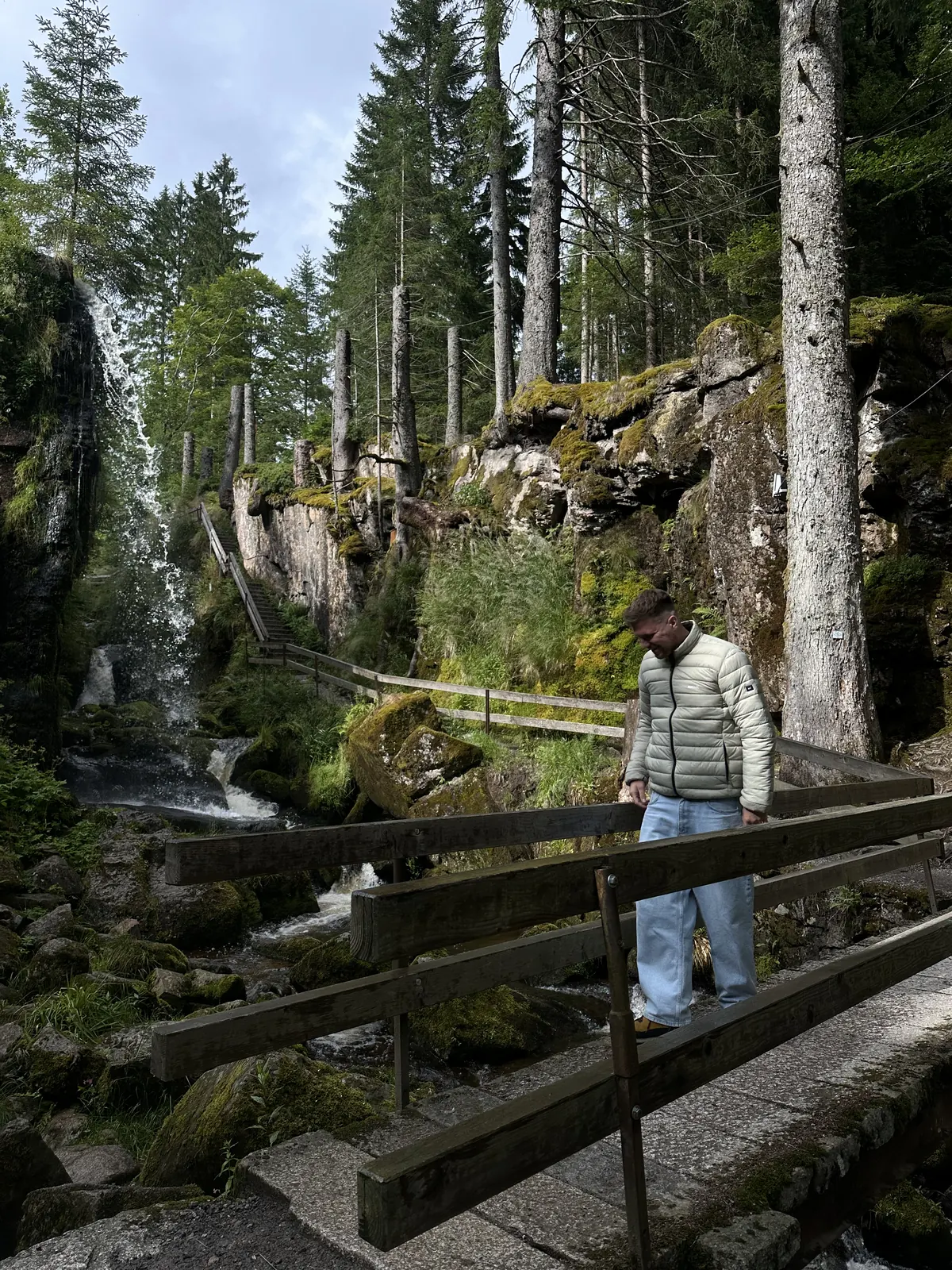
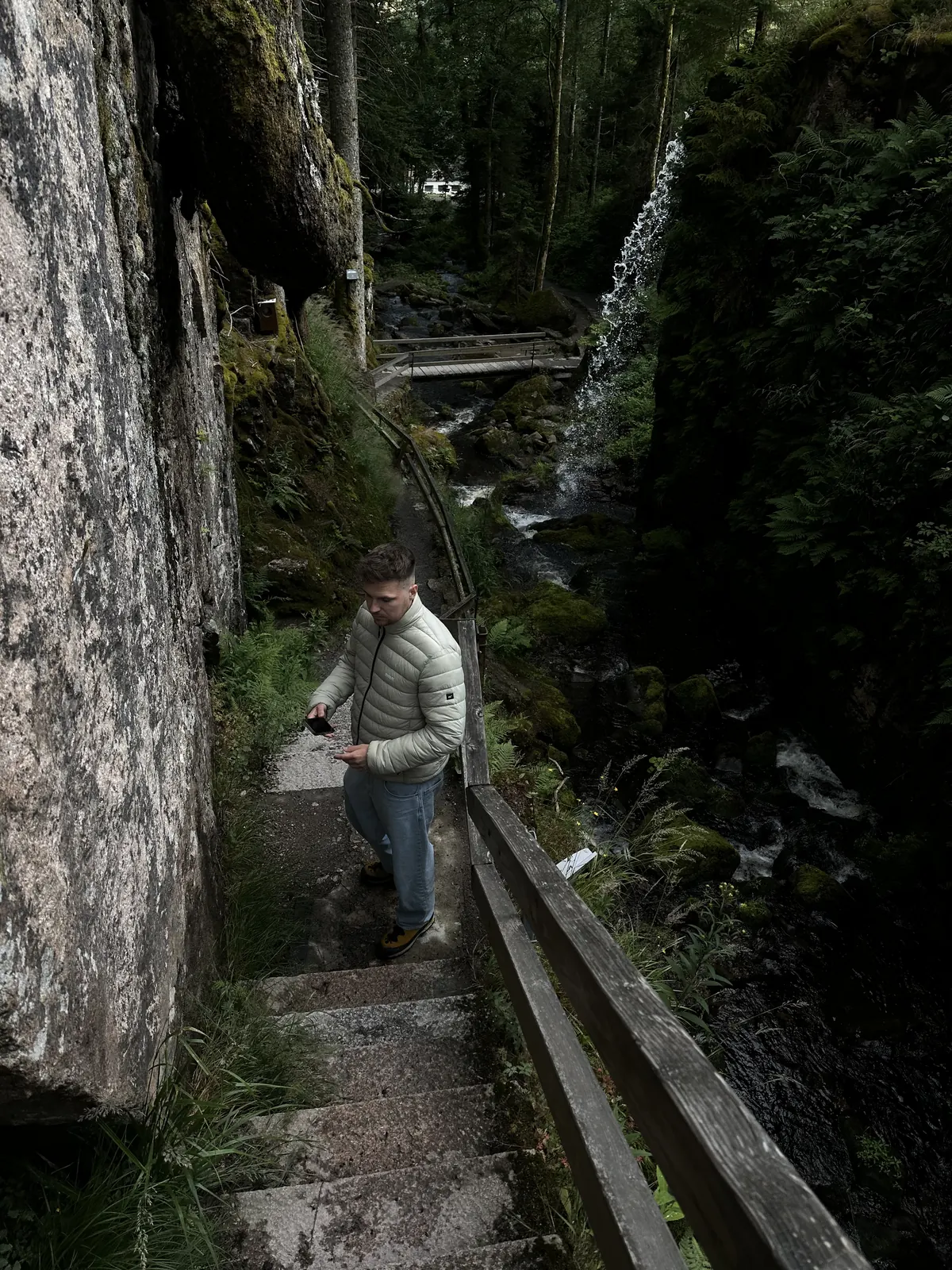
In the village of Menzenschwand (St. Blasien) the young Alb river tumbles down several steps into the valley. Wooden walkways and the narrow Geißenpfad trail lead right up to the water – mossy rocks, fir trees and bright purple foxgloves along the path in early summer.
The falls are free and far quieter than the famous Triberg falls. The short loop takes about an hour and pairs well with the Feldberg or Lake Schluchsee.
Tip: Wear grippy shoes – the walkways are slippery after rain.
What makes the south special
Cuckoo clocks have been built in the Black Forest since the 18th century.
📍 Save this guide to Google Maps
1. Quick: open as a route
2. Permanent: as your own map (2 minutes)
- Download the file with all pins (KML button below).
- Open Google My Maps → “Create a new map” → “Import” → choose the file.
- Done – every place sits exactly where it should, with number, tip and a link back to the guide.
- In the Google Maps app the map appears under “Saved” → “Maps”, also on the go.
⬇️ All pins for Google Maps (KML) ⬇️ Download place list (CSV)
3. Save one by one
Your plan
Day 1: Day 1 – High Road & northern Black Forest
- Morning – Baden-Baden, then onto the High Road
- Midday – Mummelsee and Hornisgrinde
- Afternoon – Treetop Walk or Gengenbach
- Evening – dinner in an inn
Day 2: Day 2 – Triberg & clocks
- Morning – Triberg Waterfalls (early)
- Midday – Black Forest cake at a café
- Afternoon – Black Forest Museum, Vogtsbauernhof
- Evening – back or overnight
Day 3: Day 3 – High Black Forest
- Morning – Ravenna Gorge or Wutach Gorge
- Midday – Titisee
- Afternoon – Feldberg
FAQ
Do I need a car?
Practically yes.
How many days do you need in the Black Forest?
When is the best time to visit the Black Forest?
🗺️ All places on my map → More guides and reels on Instagram: @hiddengem.atlas
Share this guide: On WhatsApp