🇪🇸 Mallorca Guide: 16 places – coves without a road, mountain villages & hidden gems
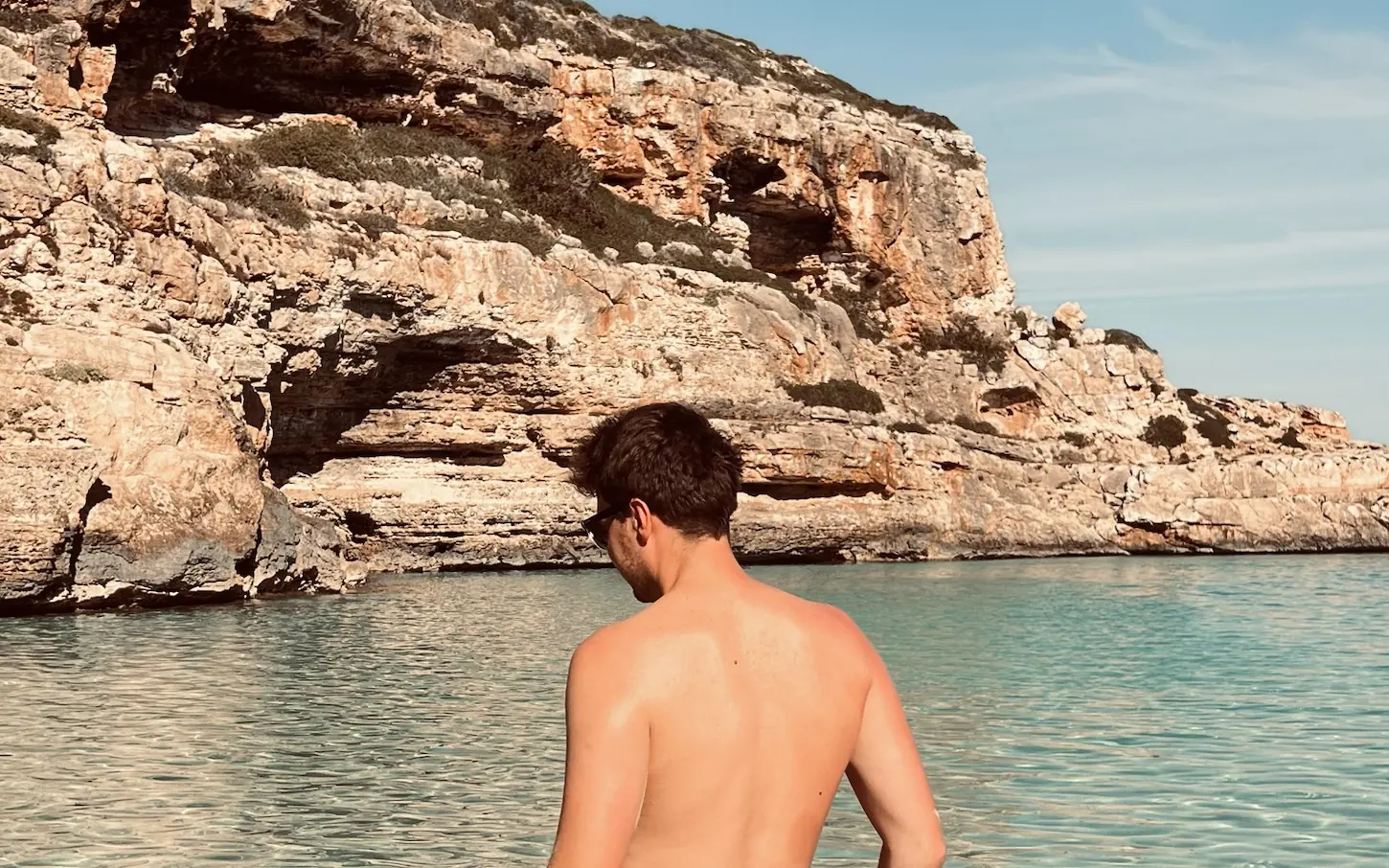
Table of contents
Mallorca has a reputation, and it has a lot to do with buckets and straws. This guide shows the other island: processions inland, coves with no road to them, a sandstone mountain village and a dinner among olive trees.
You will find getting there and bus tips, the places that are really worth it, what to eat and a five-day plan. All prices and times are guidelines (2026) – especially admissions and timetables change, so check them shortly before you travel.
🗺️ Map: 15 places at a glance
My story in Mallorca
I visited Mallorca twice in 2026, in April and in September. In April, shortly before Easter, a procession wound through Vilafranca de Bonany: penitents in long robes with pointed hoods, music, silence in between. That is the Mallorca you never get to see from the beach. At Moltak in Palma I learned to cook paella in an old windmill – apron on, big pan, lots of laughter. In Valldemossa I stood at the wall with my camera trying to capture the rooftops against the Tramuntana mountains. Spoiler: it is better live.
This guide contains affiliate links (GetYourGuide, Omio). If you book through them I earn a small commission – you never pay a cent more. Prices and opening hours change – double-check before you go.
🆓 Free things to do
5 places in Mallorca you can enjoy without an entry fee or completely free (for some, only a part costs extra, e.g. a tower or museum):
At a glance
Getting to Mallorca and around
Arrival
The airport is Palma de Mallorca (PMI). Buses run from there to the city centre (EMT airport line; around €5 a trip, check lines and prices beforehand) – from the centre it is a short walk into the old town.
Bus
Inside Palma the EMT buses (single about €2 cash). Between towns the TIB intercity buses: short trips from about €3, longer ones up to around €10–13.50 cash; with the rechargeable card they are cheaper or partly free – this changes, so check the TIB site first. To Valldemossa runs line 210 from the Estació Intermodal bus station (about 30–40 minutes).
Historic train to Sóller
The wooden train Palma–Sóller costs about €22–23 one way, the tram onward to Port de Sóller about €9–10. Combined tickets are usually cheaper. Neither is covered by the free-travel cards.
Rental car
For coves like Cala Màrmols or s'Almunia and the villages of the Tramuntana a car pays off. In high season parking at the highlights fills early – Noel’s advice: start early.
1. Coves you have to earn
The best coves in the south-east have no kiosk and no sunbed rental. Instead you get turquoise water and usually fewer people than on the big beaches.
Cala Màrmols💎 Hidden gem🆓 Free to experience
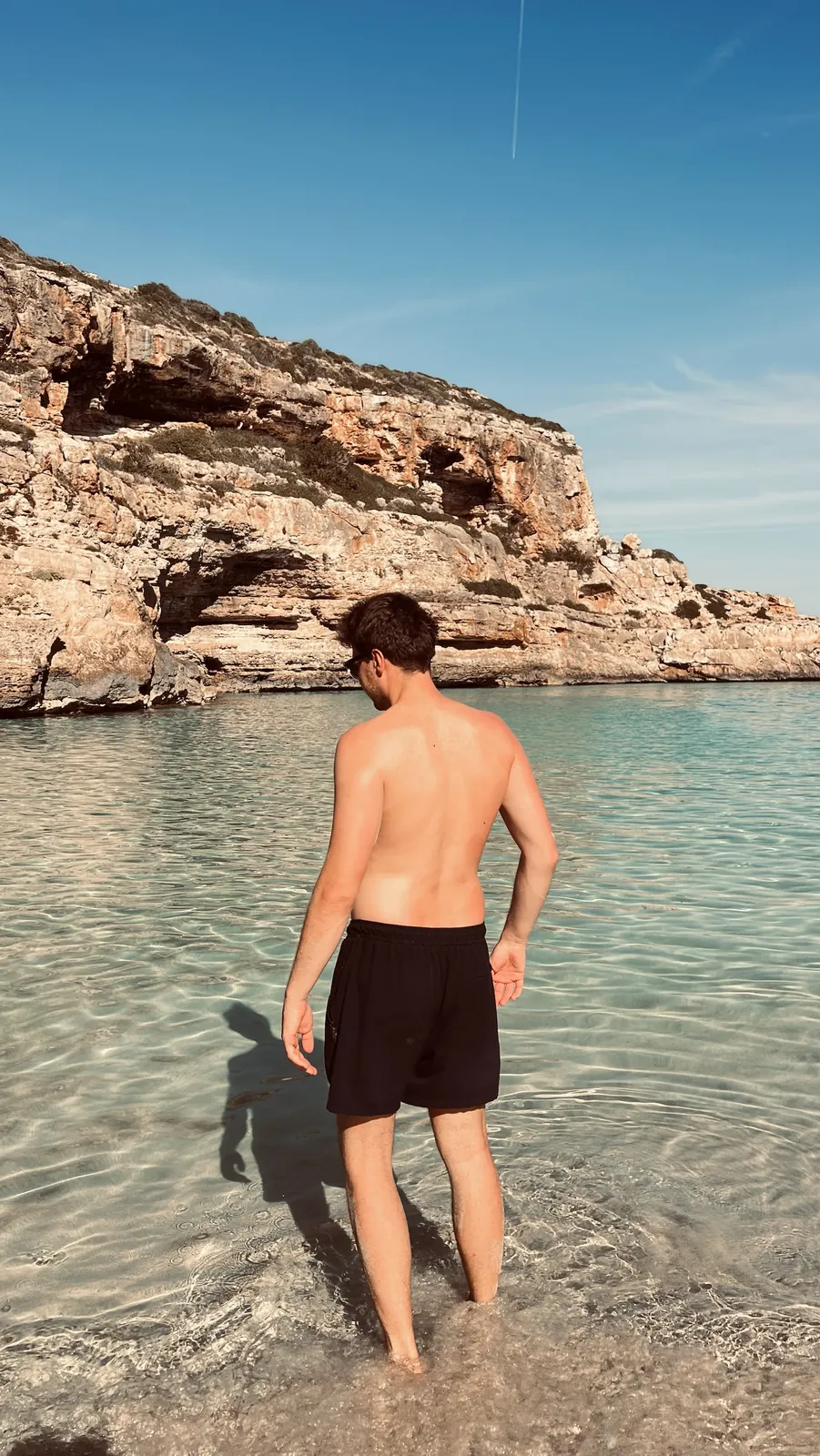
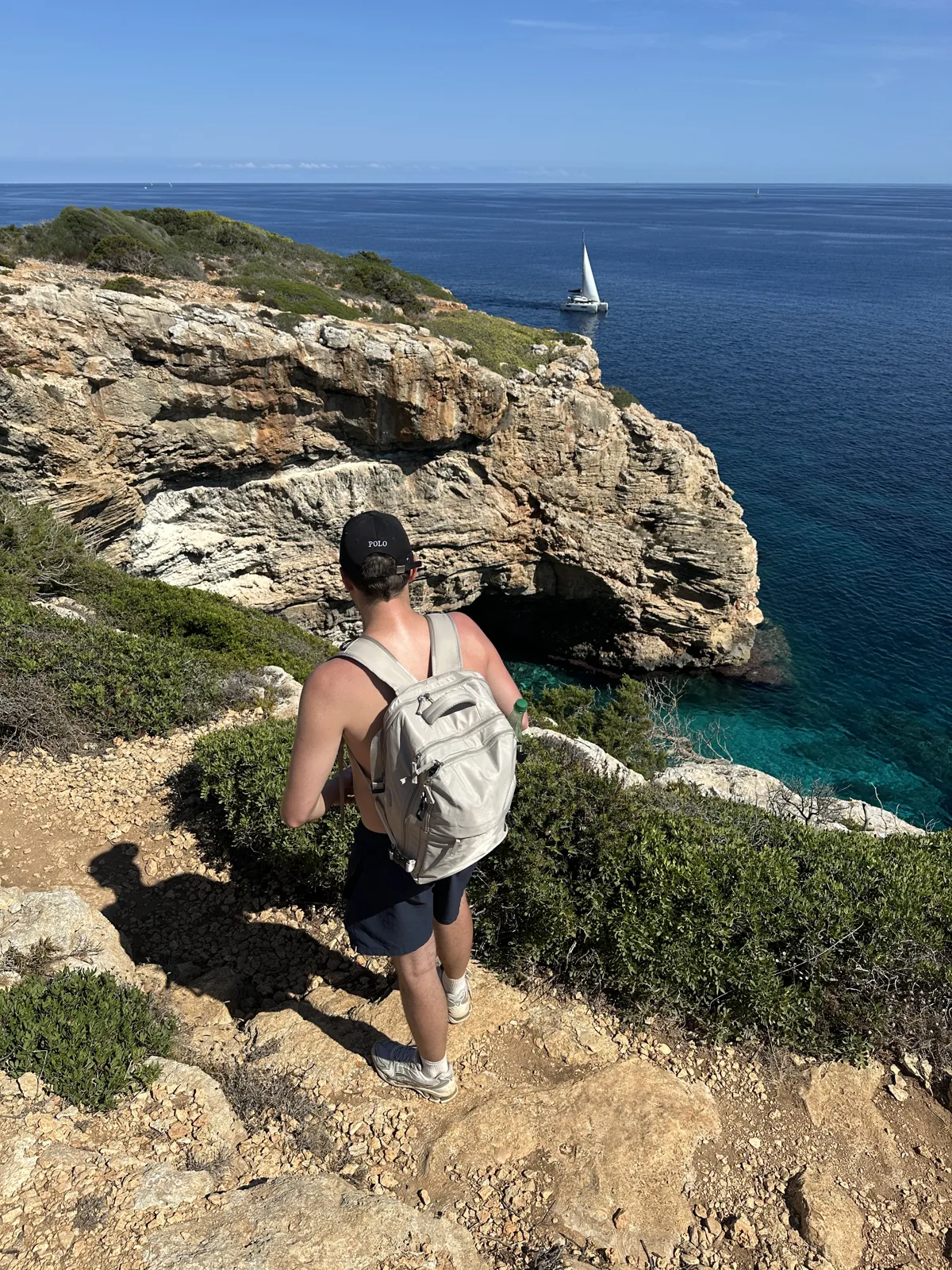
A cove in the south with no road and no kiosk – you only get there on foot or by boat. The scramble down over the rocks is worth it: turquoise water and a rock arch as if someone had put it there. The walk from the lighthouse at Cap de ses Salines takes roughly 1 to 2 hours each way depending on your pace and is stony throughout.
Take enough water, sun protection and sturdy shoes – there is no shade and no supplies on the way. The cove lies near the Cap de ses Salines nature area; in high summer it is worth starting early in the morning.
Tip: Sturdy shoes instead of flip-flops, plenty of water, hat and sunscreen – there is hardly any shade. In summer start early. Stay on the official path: shortcuts across private land have caused trouble with owners before. And take a rucksack instead of a beach tote so you have your hands free on the steep descent.
Cala s'Almunia💎 Hidden gem🆓 Free to experience
At Cala s'Almunia the fishermen’s old boathouses sit right on the water. It is more a small rocky cove than a sandy beach – but crystal clear and good for snorkelling. Access is via steps, and the walk from the car park takes about 10–20 minutes.
The appeal lies in the overall picture: the old boathouses, the clear water and the calm. Bring swim shoes – the entry is rocky. Especially in the late afternoon, when fewer people are there, the mood is particularly lovely.
Tip: Bring water shoes, the rocks are sharp. In high summer the cove is no secret any more – early morning or spring/September gives you much more space.
Es Pontàs💎 Hidden gem
A huge rock arch in the sea that looks like a bridge. From the viewpoint (Mirador) you see it and the cliff coast – most beautiful at sunrise or sunset. The walk from Cala Santanyí is short, about 10–15 minutes, but rocky.
Tip: Enter “Mirador del Pontàs” in Google Maps – the entry “Es Pontàs” leads to a wrong spot or private land. Swim only in calm water and only if you are a strong swimmer.
Es Trenc – the long, wild beach🆓 Free to experience
Es Trenc in the south is considered one of the island’s most beautiful beaches: a long, pale sandy beach with turquoise water and dunes behind it, located in the Es Trenc–Salobrar de Campos nature reserve. It is often called the “Caribbean of Mallorca”, and indeed far less is built here than on other coasts.
Close by lie the Es Trenc salt pans, where sea salt and fleur de sel are harvested – a nice souvenir tip. In high season parking and beach bars fill up quickly; if you want fewer people, walk a bit past the sections near the car park.
Tip: Come in the morning or in spring/autumn; in high summer parking is the bottleneck.
2. Palma without rushing
La Seu – Palma Cathedral
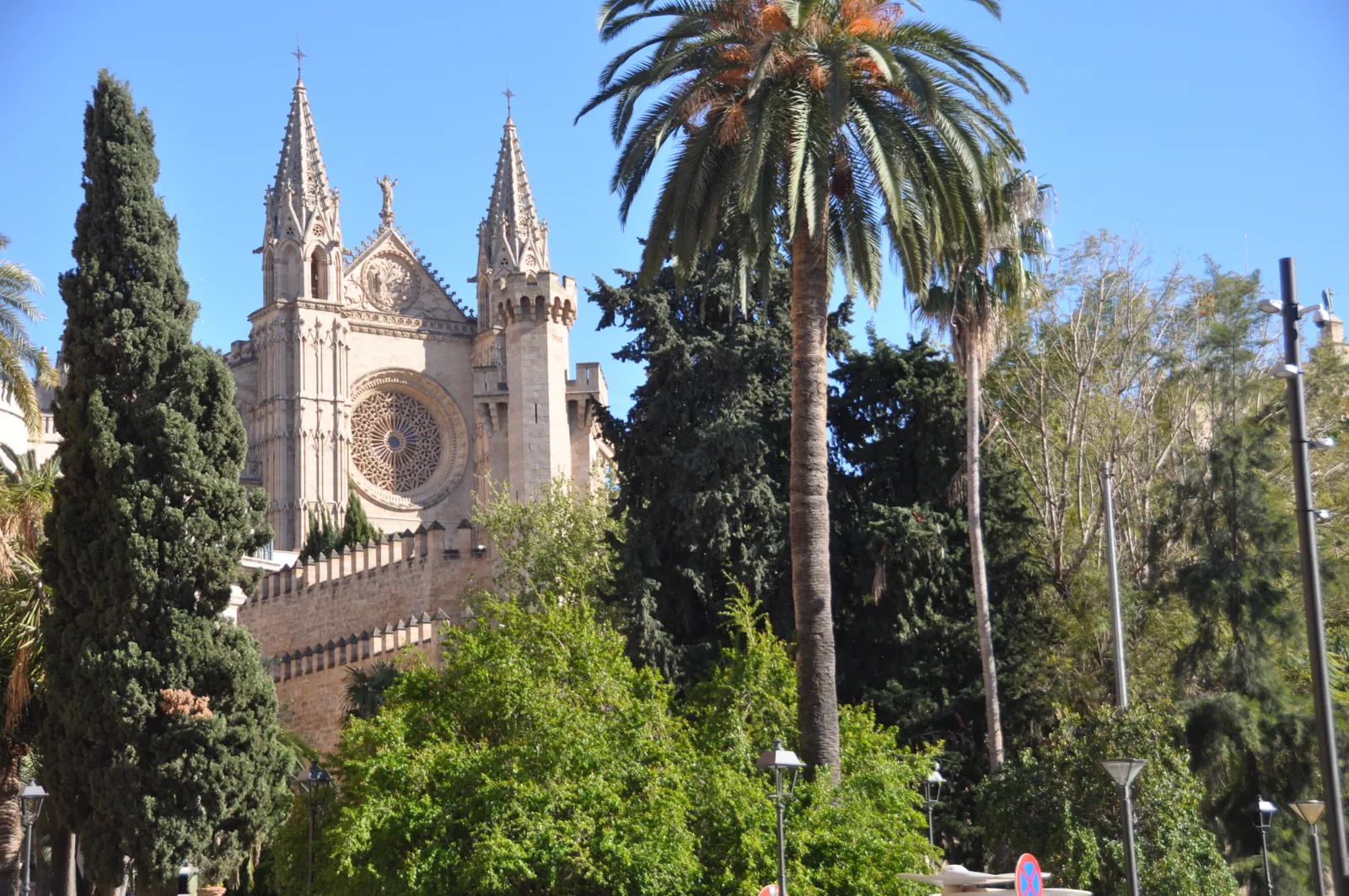
La Seu, Palma’s Gothic cathedral, stands right by the sea and looks almost painted between the palm trees. From a rooftop terrace in the old town it lies at your feet.
La Seu was begun in 1229 under King James I of Aragon and, with its nave about 44 metres high, counts as one of the tallest Gothic church interiors in Europe. Famous is the large rose window, which on some days bathes the interior in coloured light. Antoni Gaudí worked on the interior in the early 20th century, among other things on the baldachin over the altar.
Admission is charged, and there are time slots for roof-terrace tours. Please check prices and times beforehand. The cathedral looks best in the evening, when warm light falls on the sandstone and the façade is mirrored in the water of the Parc de la Mar.
Tip: Take the photo from the Parc de la Mar in the late afternoon; inside the rose window is best in the morning.
Paella cooking class at Moltak💎 Hidden gem
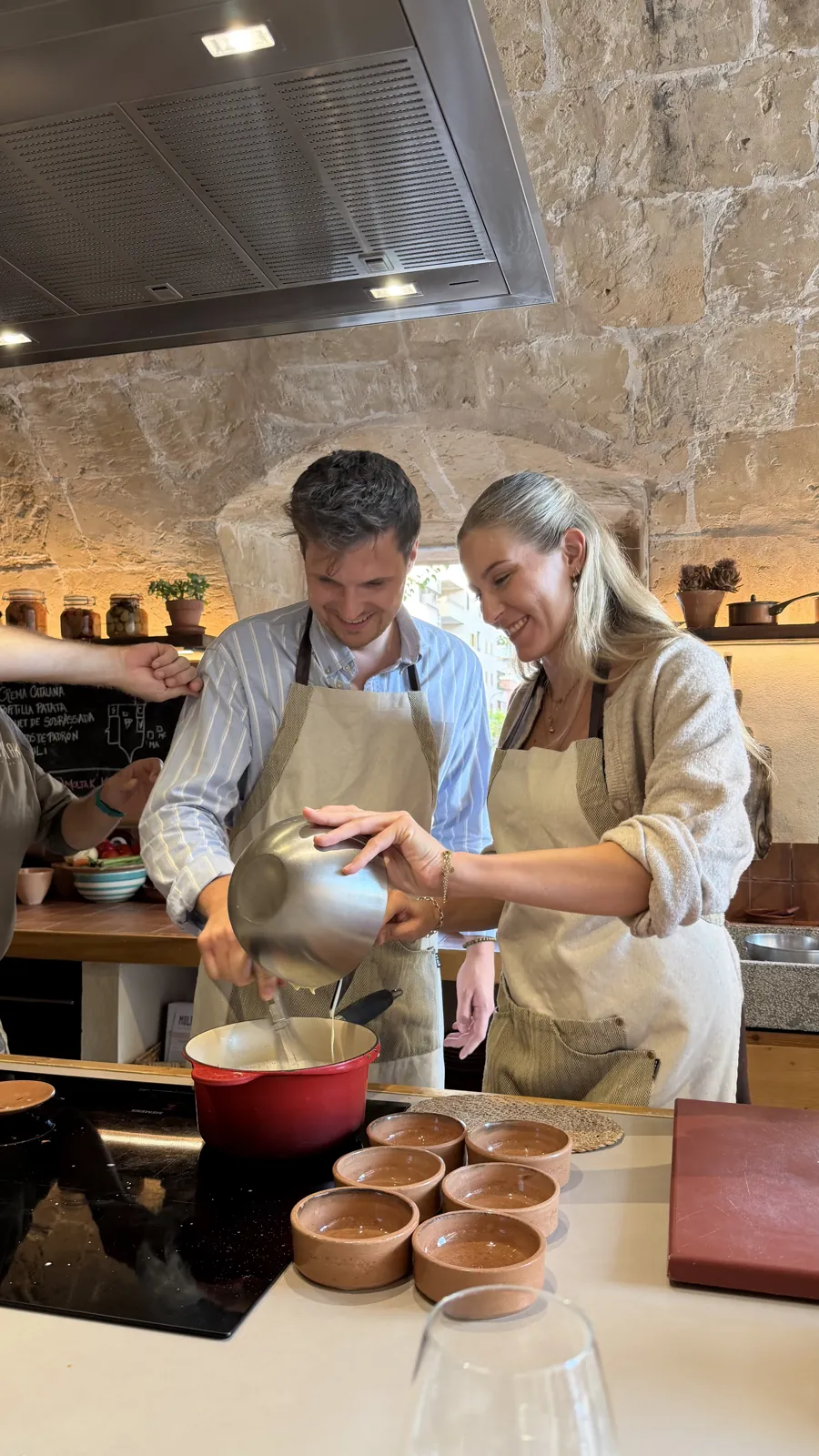
At Moltak I learned to cook paella in an old windmill – apron on, big pan, lots of laughter. The best part: the relaxed atmosphere – and you take the recipes home.
Tip: Book ahead – evening slots especially are popular. Plan a day without a long excursion for it.
Palma: Almudaina Palace, old-town lanes & market halls
Around the cathedral lies Palma’s old town with narrow lanes, courtyards (patios) and small squares. Right next to La Seu stands the Almudaina Palace, the former residence of the Mallorcan kings – a mixture of Moorish fortress and Gothic palace. The old town is small enough to explore on foot in half a day.
If you want to eat like the locals, head to the market halls: the Mercat de l’Olivar in the centre and the smaller Mercat de Santa Catalina in the district of the same name are known for fresh seafood, fruit, olives and cheese; at the counters you can also get tapas. The Santa Catalina district is also popular for its cafés and bars.
My advice: start early in the morning at the cathedral, then through the lanes to the market and into a small bar at lunchtime – if you plan for midday, the terraces by the sea fill up quickly.
Tip: Plan the old town for the morning and the markets as a lunch break – in summer the afternoon sun is fierce and many shops close for siesta.
Bellver Castle
Bellver Castle sits on a hill above Palma and is one of the few castles in Europe with a circular floor plan. It was built in the 14th century and later served as a prison, among other things. Today it houses a city museum.
The big plus is the view: from the roof you look over the Bay of Palma, the cathedral and the mountains inland. A walk through the surrounding pine forest is easy, and admission is comparatively cheap (check prices and times beforehand).
Tip: Take a bus or taxi up and walk back through the forest – or the other way round if you want to be there early.
3. Valldemossa & the Tramuntana
Valldemossa
A mountain village of sandstone where Chopin spent the winter of 1838/39 – together with George Sand in the cells of the charterhouse. There is a museum with Chopin’s piano and manuscripts as well as a baroque church and an old pharmacy. The lanes are pretty but crowded around lunchtime.
Besides Chopin, Valldemossa is also known for the coca de patata, a soft potato pastry dusted with icing sugar, which you can get in many bakeries in the village. Ceramic tiles with saints hang on the house walls, recalling the village saint Santa Catalina Tomàs.
The village is truly beautiful – and therefore crowded in the morning and at lunchtime. If you come early or in the late afternoon you have the lanes almost to yourself. For a photo of the roofs against the mountains, soft light works best.
Tip: Come early or in the late afternoon and try a coca de patata at the baker.
Sóller & the historic train
The old wooden train from Palma runs into the mountains to Sóller, from there a tram continues to the coast at Port de Sóller. Relaxed and doable without a rental car – a good plan if you do not want to drive.
The “Red Lightning” train (Tren de Sóller) opened in 1912 and takes about an hour in historic wooden carriages through tunnels and orange groves to Sóller. The line is around 27 kilometres long, the fare depends on timing – check current prices and times beforehand.
In Sóller a historic tram runs to Port de Sóller; the orange town has a pretty main square with the church of Sant Bartomeu. If you use the train without a car, plan a whole day and start early in the morning.
Tip: Set off in the morning; the last trains back do not run late, check the return times beforehand.
Serra de Tramuntana & GR 221
The mountain range in the north-west is about 90 kilometres long, up to roughly 1,500 metres high and a UNESCO World Heritage Site since 2011. Villages such as Deià, Fornalutx or Estellencs can be reached by car; the long-distance trail GR 221 (the “dry stone route”) runs around 160 kilometres through the range.
The Tramuntana is a paradise for hikers and cyclists: from short walks to multi-day stages on the GR 221 you find everything. The villages of Deià, Fornalutx and Estellencs are popular targets, and many hikes start right at the edge of the village. In spring and autumn the weather is most pleasant; in high summer it is often too hot for hiking.
Tip: The roads are winding and narrow – drive early and allow more time than the satnav says.
Sa Calobra & Torrent de Pareis
A gorge where the Torrent de Pareis meets the sea and ends at a pebble cove – one of the natural highlights of the west coast. The approach is a serpentine road, and in high season it is crowded.
The road to Sa Calobra is legendary: it winds down in countless hairpin bends, with a loop called the “tie knot” (Nus de sa Corbata). At the bottom you reach the mouth of the Torrent de Pareis, which opens through a narrow rock passage into a pebble cove.
The drive is not for novice drivers or big coaches; in high summer it jams. An alternative is to arrive by boat, for example from Port de Sóller – then you skip the bends. If you want to hike, you can walk a bit into the gorge, but only in dry weather and with sturdy shoes.
Tip: Go early or come by boat; after heavy rain the gorge is dangerous.
Deià & Cala Deià💎 Hidden gem🆓 Free to experience
Deià is a mountain village of sandstone houses on a slope of the Tramuntana, with olive groves, small galleries and restaurants. It feels like something from another time; the English poet Robert Graves lived here. Below lies Cala Deià, a small rocky cove with a pebble beach and simple restaurants right by the water.
The way down to the cove is steep and takes roughly 20–30 minutes on foot; the way back is strenuous. In summer the cove fills up quickly, and parking at the village is limited.
Tip: Go early or in spring/autumn, then you have the village almost to yourself.
Cap de Formentor
Cap de Formentor is the island’s northernmost tip: a narrow road winds through rocky scenery to the lighthouse of 1863. On the way lie viewpoints such as the Mirador es Colomer, from which the cliffs drop almost 200 metres into the sea.
The drive is already the experience, but in high summer the road is busy and parking is scarce; if you go early in the morning or at sunset it is easier. Bring water – there is little at the lighthouse.
Tip: Go early in the morning or at sunset – by day in summer the cars queue.
4. Eating & villages inland
This is where you meet the Mallorca that does not need a beach: markets, village bakeries and long dinners in the countryside. A typical souvenir: the ensaïmada, the lard pastry you carry home as a spiral in a box.
Qanat de Treurer💎 Hidden gem
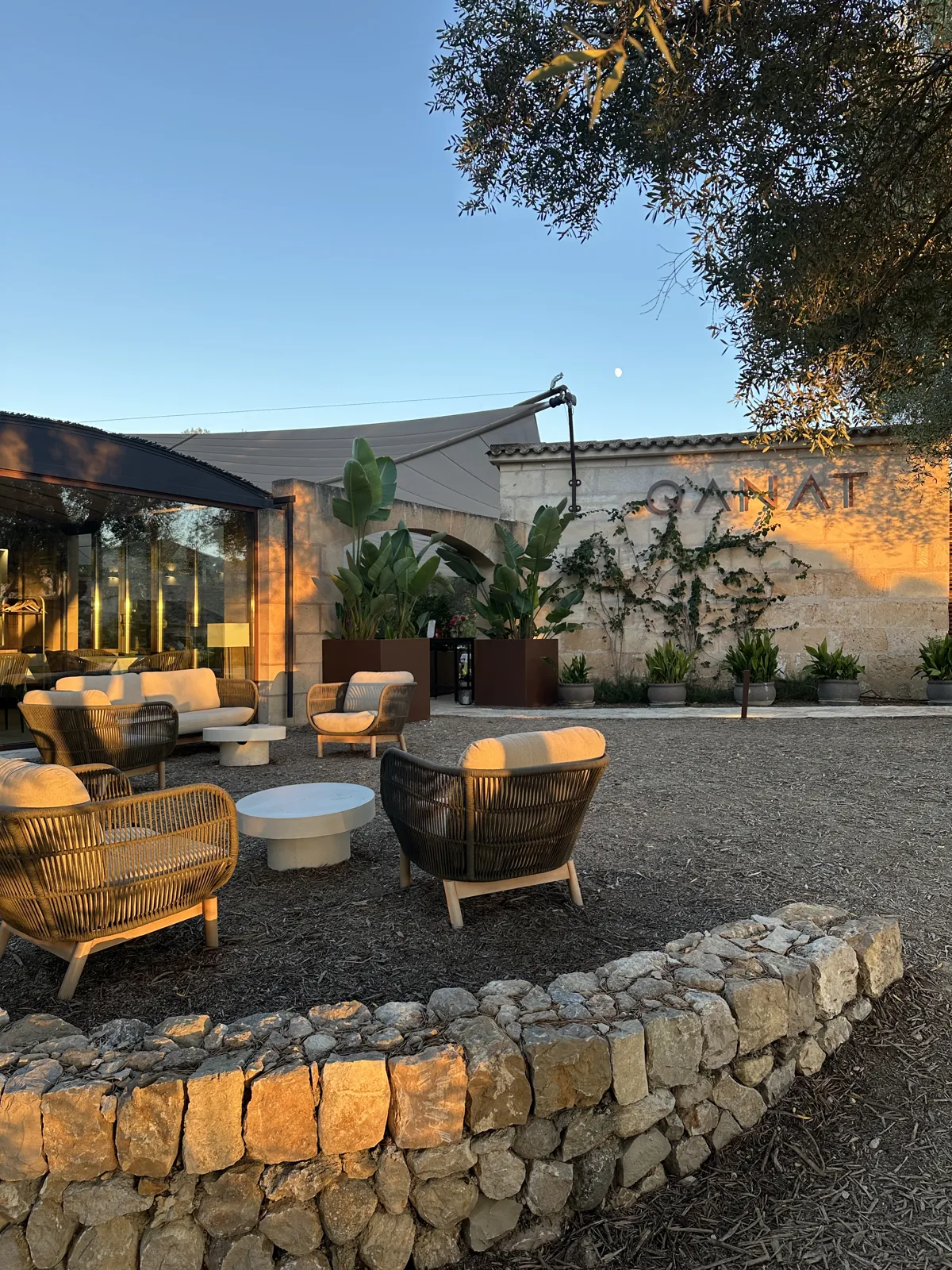
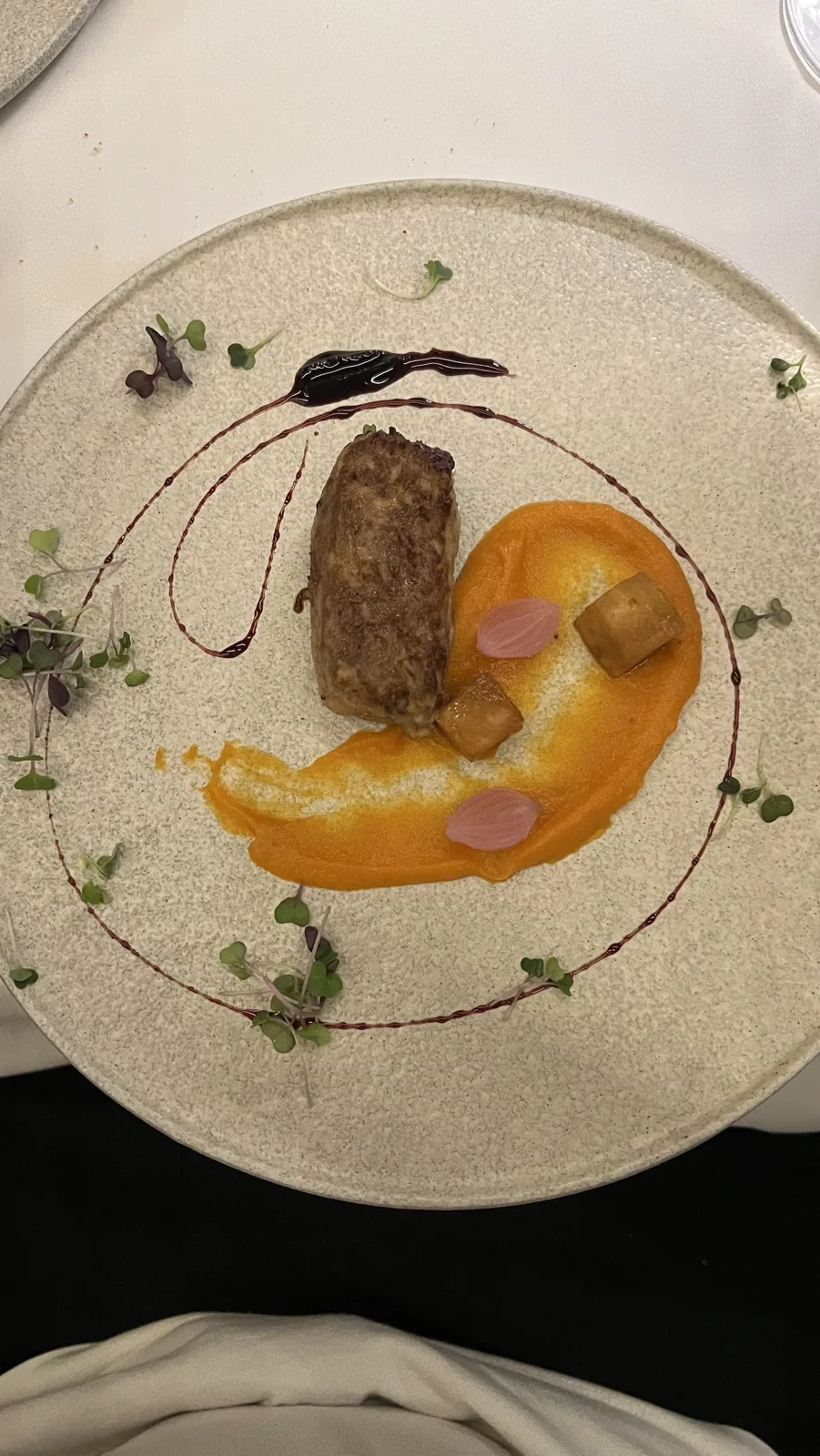
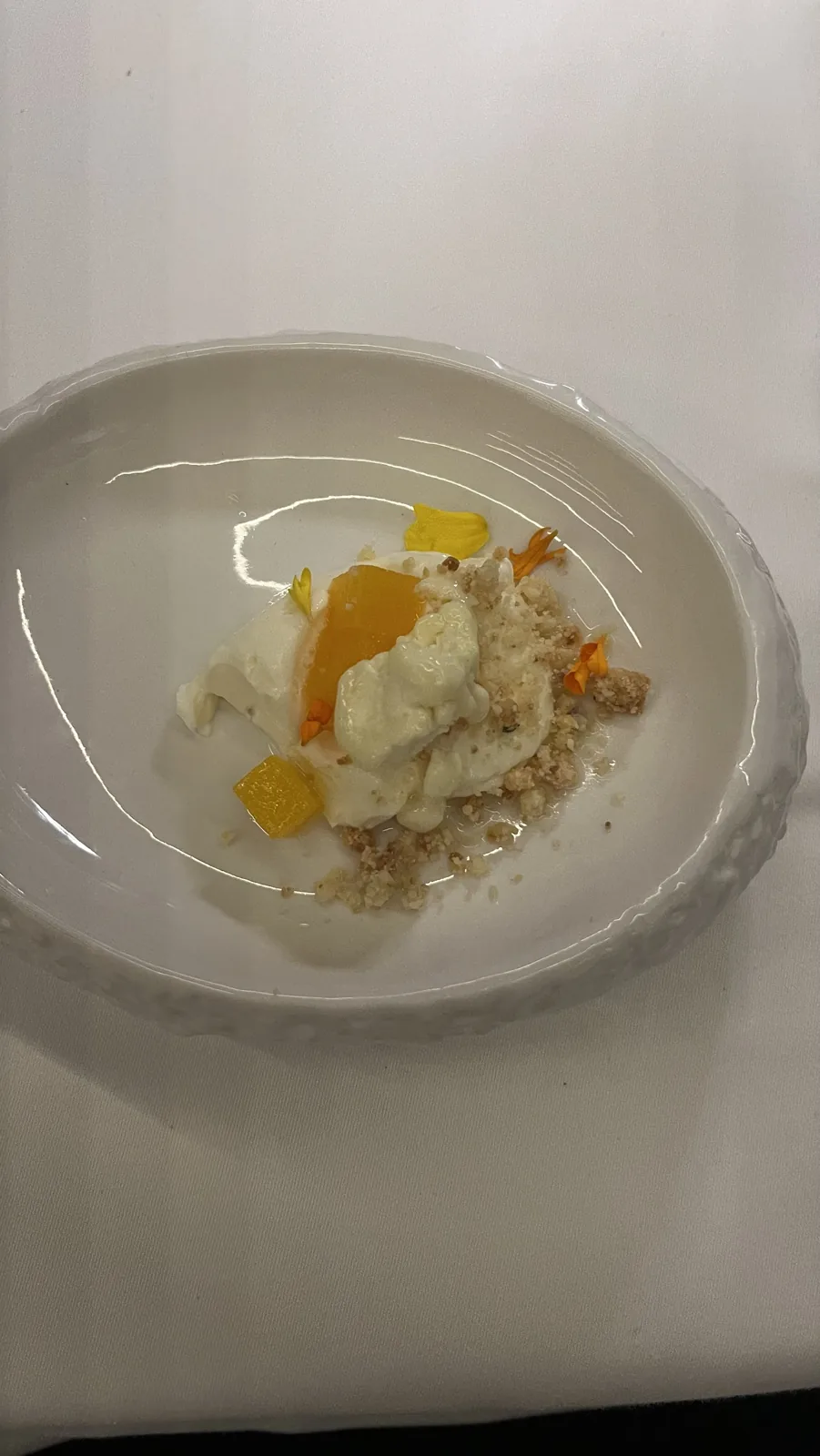
Fine dining among olive trees near Algaida, with a terrace that glows at golden hour. Especially good: the terrace, the barbecue night and the olive-oil tour.
Tip: Reserve, and arrive early enough to catch the terrace at golden hour.
Wednesday market in Vilafranca de Bonany🆓 Free to experience
At the Wednesday market in Vilafranca there are olives, sardines and spices, and fresh pastry at the village bakery. In April, shortly before Easter, a procession passed through here – a Mallorca you never see at the beach.
Tip: Markets are best early in the morning. Holy Week is fascinating but streets and parking can be closed or full then.
Where to stay
- Palma old town: perfect without a car, close to the cathedral, cafés and buses.
- Sóller / Port de Sóller: mountains and coast, good for hikers and the historic train.
- South-east (Santanyí, Cala Santanyí): base for Cala Màrmols, s'Almunia and Es Pontàs – with a car.
- Inland (Algaida, Vilafranca): quiet, country hotels and fincas – ideal for markets and food.
Tip: if you have two weeks, combine Palma with a quieter base in the south or in the mountains. With less time, sleep in Palma and do day trips.
What makes Mallorca special
Behind the party beaches lies an island with its own language – Mallorquin, a form of Catalan –, with almond blossom in February and the Tramuntana mountains. Around 3,000 years ago people already built stone towers here, the talayots; remains of them still stand inland. In 1229 King Jaume I of Aragón conquered the island from the Moors. And in winter 1838/39 Frédéric Chopin and George Sand lived in the charterhouse of Valldemossa – a rather rainy winter, as Sand later wrote.
My conclusion: Mallorca can do far more than beach and sangria. Go inland, hike to the coves without a road and plan at least one evening for really good food.
📍 Save this guide to Google Maps
1. Quick: open as a route
2. Permanent: as your own map (2 minutes)
- Download the file with all pins (KML button below).
- Open Google My Maps → “Create a new map” → “Import” → choose the file.
- Done – every place sits exactly where it should, with number, tip and a link back to the guide.
- In the Google Maps app the map appears under “Saved” → “Maps”, also on the go.
⬇️ All pins for Google Maps (KML) ⬇️ Download place list (CSV)
3. Save one by one
Your plan
Day 1: Day 1 – Palma
- Morning – La Seu cathedral and old town lanes
- Midday – lunch in the old town, then a rooftop terrace with a view of the cathedral
- Evening – paella cooking class at Moltak (book ahead)
Day 2: Day 2 – Valldemossa & Tramuntana
- Early – to Valldemossa, arrive before 9:30 am
- Morning – charterhouse, Chopin cells, lanes
- Afternoon – Tramuntana villages like Deià or Fornalutx, or Sóller by wooden train
Day 3: Day 3 – South-east coves
- Early – hike to Cala Màrmols (lighthouse at Cap de ses Salines)
- Afternoon – Cala s'Almunia or Es Pontàs at sunset
Day 4: Day 4 – Inland
- Morning – Wednesday market in Vilafranca (if it is Wednesday), village bakery
- Evening – dinner at Qanat de Treurer (reserve, closed Mondays)
Day 5: Day 5 – Sa Calobra or a break
- All day – Sa Calobra and Torrent de Pareis, or a calm day in Palma with an ensaïmada to take home
FAQ
How many days do you need on Mallorca?
Five days cover Palma, Tramuntana, the south-east coves and the interior – with a rental car. Without a car, 3–4 days with Palma, Sóller and Valldemossa are realistic.
When is the best time to visit?
April to June and September to October: pleasantly warm and less crowded. Noel was there in April and September. In February the almond trees bloom.
Do I need a car?
For Cala Màrmols, s'Almunia, Es Pontàs and the interior yes – public connections there are thin. For Palma, Valldemossa (bus 210) and Sóller (train) you can manage without.
Is Cala Màrmols suitable for children?
Rather not: the path is long, stony and shadeless, the descent steep, and there are neither toilets nor a kiosk. Easier-to-reach beaches suit families better.
What should I definitely eat?
Ensaïmada (lard pastry), coca de patata in Valldemossa, olives and sardines from the market and paella – ideally cooked yourself in a class.
🗺️ All places on my map → More guides and reels on Instagram: @hiddengem.atlas
Share this guide: On WhatsApp