🇨🇿 Prague Guide: 25 Highlights & Hidden Gems – Charles Bridge, Gardens, Vyšehrad
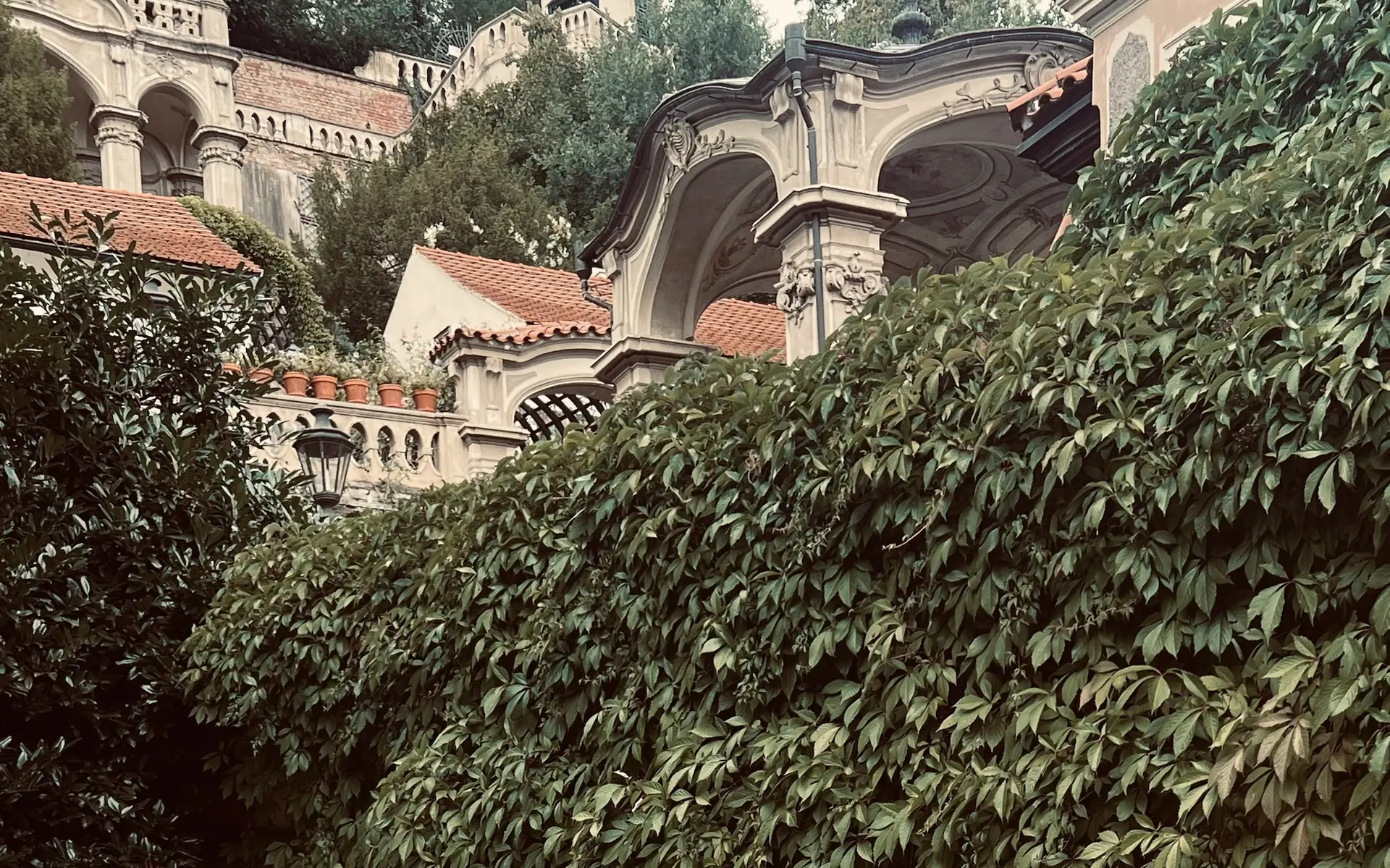
Table of contents
- 🗺️ Map: 20 places at a glance
- My story in Prague
- At a glance
- How to get to Prague
- Getting around: tickets, money, traps
- 1. The classics – with my tips on how to see them without the crowds
- 2. Gardens & quiet corners around the Lesser Town
- 3. New Town: arcades, a garden and Cubism within five minutes
- 4. Views & beer garden
- 5. Vyšehrad: the cemetery of the greats
- 6. Art & quirky Prague
- 7. Food & drink
- Where to stay
- 8. Day trips from Prague
- Your plan
- FAQ
Everybody knows Prague – and that is exactly why it is so easy to get stuck in the wrong corners. This guide takes you around the crowds: to gardens behind unremarkable gates, to a cemetery that feels more like an open-air museum, to beer gardens with a view over the city and to places where locals eat too.
It is built so you can do it in a long weekend – even if you do not have endless holiday. Further down you will find a three-day plan, the key prices and tips for getting there and paying.
🗺️ Map: 20 places at a glance
My story in Prague
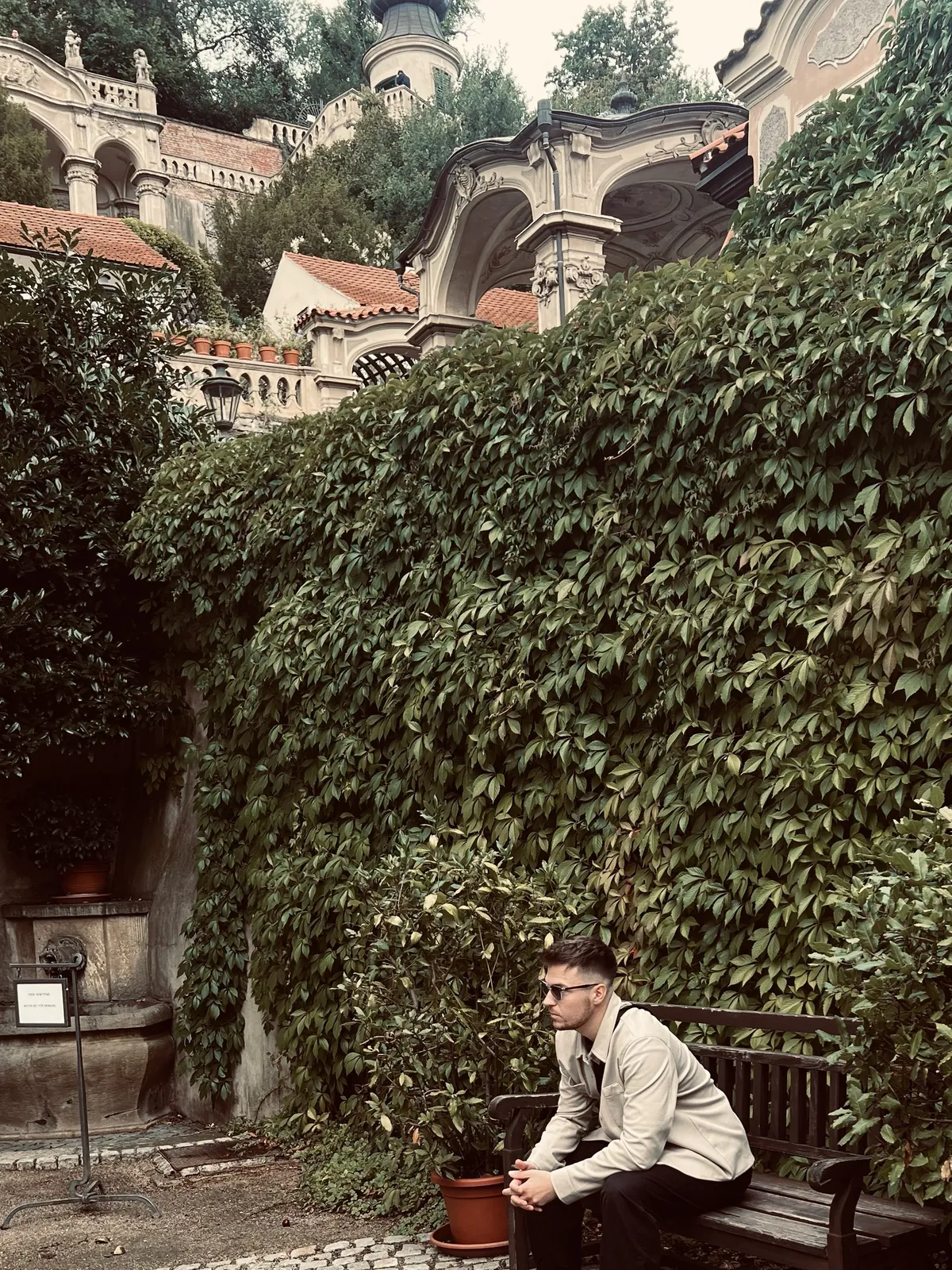
I was in Prague in 2024. I learnt what the real Prague is in Malá Strana: as soon as you turn off Charles Bridge into the side lanes it gets quiet – cobblestones, palace gardens, the tram squealing round the corner. My advice: cross the bridge at 7 am and head straight into the Lesser Town before the groups arrive.
This guide contains affiliate links (GetYourGuide, Omio). If you book through them I earn a small commission – you never pay a cent more. Prices and opening hours change – double-check before you go.
🆓 Free things to do
9 places in Prague you can enjoy without an entry fee or completely free (for some, only a part costs extra, e.g. a tower or museum):
At a glance
How to get to Prague
By plane
The cheapest way into the Old Town: bus 119 to Nádraží Veleslavín, then the green metro line A. In total that takes around 40 minutes, and one 90-minute ticket covers both rides. The Airport Express (AE) runs directly to the main station (Hlavní nádraží) in about 35 minutes and costs extra. Tickets are sold at the yellow machines in the terminal or in the PID Lítačka app.
By train
Berlin–Prague takes roughly 4 to 4.5 hours direct, with around eight direct trains a day. From Dresden it is a good two hours. Booking early pays off: saver fares are often around €25–35 in second class, while same-day prices can be much higher.
By bus
Long-distance buses (for example FlixBus) link Prague with many German cities – often the cheapest but slowest option.
Getting around: tickets, money, traps
Prague is best on foot
The Old Town, Lesser Town and castle sit close together – plan walking time rather than rides. For the hills (castle, Letná, Vyšehrad) tram and metro are worth their weight in gold.
Tickets for metro, tram and bus
- One ticket works on metro, tram and bus. There are 30-minute, 90-minute, 24-hour and 72-hour tickets.
- Approximate prices (2026, digital tickets are usually a bit cheaper): 90 minutes about 40–50 CZK, 24 hours about 120–150 CZK, 72 hours about 330–350 CZK.
- Validate paper tickets immediately. Inspectors wear plain clothes; without a valid ticket you pay around 1,200 CZK.
- The metro runs roughly from 5 am to midnight, after that night trams 91–99 take over.
Money
You pay in koruna. Cards work almost everywhere. Exchange offices in the Old Town are rarely worth it – withdraw cash at an ATM of a normal bank instead. If the machine or card terminal asks whether you want to pay in euros or koruna: always choose koruna. At the beer garden in Letná Park some stands take cash only.
Tourist traps
Charles Bridge is packed during the day – Noel’s tip: go at 7 am. The chimney cake trdelník is often sold as typically Czech but is more of a tourist snack. Try a lunch menu or a pastry from a bakery instead.
1. The classics – with my tips on how to see them without the crowds
Charles Bridge (Karlův most)🆓 Free to experience
The Charles Bridge is the heart of Prague and the city’s most famous bridge: 516 metres long, built from 1357 under Emperor Charles IV, carried by 16 arches and lined with statues that are mostly copies. By day it is a crush of people, street musicians and artists – but it is a pedestrian-only bridge and free at any time.
My advice is already in my story: be on the bridge at 7 am, before the groups arrive. Then it is almost yours alone, the light over the Vltava is soft and you see Prague Castle in the morning haze. Afterwards turn straight into the lanes of the Lesser Town – it gets quiet immediately.
One detail many people overlook: on the statue of St John of Nepomuk the bronze reliefs are polished bright from touching; tradition says it brings luck. You can climb the two bridge towers (Old Town and Lesser Town side) and get one of the best views of the bridge and river from there – check admission beforehand.
Tip: Come at 7 am or after dark. By day the bridge is mainly worth it as a way across – take photos early or late.
Old Town Square & the Astronomical Clock (Orloj)🆓 Free to experience
The Old Town Square (Staroměstské náměstí) is Prague’s historic living room: a large square surrounded by colourful gabled houses, the Old Town Hall and the twin-towered Týn Church. In the middle stands the Jan Hus Monument, unveiled in 1915.
The highlight is the Astronomical Clock (Orloj) on the town hall tower, which has run since 1410 and is regarded as the oldest astronomical clock still working. Every full hour – roughly 9 am to 9 pm – a procession of apostle figures passes the upper window, accompanied by Death ringing the bell. Frankly the show is short and the square is packed then; if you want to see it, stand at the edge 10 minutes early.
From the town hall tower you get up by lift and have a wide view over the red roofs. Please check admission and times beforehand; the town hall interior is only partly accessible.
Tip: Come early in the morning or late in the evening when the tour groups are gone. Midday and on the hour the square is at its fullest.
Lesser Town: Nerudova, Lennon Wall & Kampa
The Lesser Town (Malá Strana) is the district that explained Prague to me: as soon as you turn off the Charles Bridge into the side lanes it gets quiet – cobblestones, palace gardens, the tram squeaking around the corner. Nerudova street leads steeply up to the castle, lined with baroque façades with house signs instead of numbers.
Three stops on the way are worth it: the baroque St Nicholas Church (Kostel sv. Mikuláše) with its green dome, the Lennon Wall, covered since the 1980s in graffiti, messages and lyrics, and the island of Kampa, separated from the mainland only by a narrow watercourse, the Čertovka (“Devil’s Stream”) – with an old mill wheel and quiet riverside paths. On Kampa the faceless baby sculptures by David Černý also crawl across the lawn.
The tram also brings you here; I shot a short clip of the tram in the Lesser Town. Plan half a day, ideally with breakfast at Café Savoy and the Vrtba Garden right at opening.
Tip: Walk up Nerudova in the morning and return via Kampa after the castle – that way you get the quiet corners before they fill up.
Josefov – the Jewish Quarter💎 Hidden gem
Josefov, the former Prague ghetto, lies right next to the Old Town and is one of Europe’s most important Jewish heritage sites. The Jewish Museum manages several synagogues and the Old Jewish Cemetery; tickets are sold as a combined ticket (check the price beforehand; the sites are closed on Saturdays and on Jewish holidays).
The Old-New Synagogue (Staronová synagoga) dates from the 13th century (around 1270) and is regarded as the oldest still-active medieval synagogue in Europe. The Old Jewish Cemetery is hauntingly beautiful: over centuries the dead were buried layer upon layer, which is why thousands of gravestones stand crowded and tilted next to each other. The Spanish Synagogue with its Moorish-style interior is also worth a look.
Josefov is also the neighbourhood of Franz Kafka, who was born nearby. If you want a feeling for the city beyond the postcard motifs, this is a quieter, more thoughtful morning.
Tip: Allow at least 2–3 hours and book online in high season – the cemetery is quietest in the morning.
Petřín: lookout tower, rose garden & Hunger Wall
Petřín is Prague’s green hill above the Lesser Town – a park with orchards, a rose garden and a lookout tower built in 1891 after the model of the Eiffel Tower (about 63 metres high, roughly 299 steps). From the top you see the whole city, the Vltava and the castle.
You go up comfortably by funicular, which starts in the Lesser Town (Újezd); a normal public transport ticket usually applies – please check the current rules on site. The 14th-century Hunger Wall (Hladová zeď) also runs across the hill; according to tradition it was built as a job scheme for the poor.
Petřín is ideal for a late afternoon, when the light gets soft and the Lesser Town glows golden below you. A walk downhill back to the Lesser Town takes about 20–30 minutes.
Tip: Take the funicular up and walk back down – it saves energy and you see the Lesser Town from above.
Dancing House (Tančící dům)
On the Vltava embankment in the New Town stands a building that looks as if it were dancing: the Dancing House (“Fred and Ginger”), designed by Vlado Milunić and Frank Gehry and completed in 1996. The glass tower “Ginger” nestles against the stone tower “Fred” – a deliberate break with the baroque and Gothic neighbours.
From the outside it is quickly ticked off, but the walk along the river is worth it: from the promenade you see the castle and bridges, and on the roof there is a restaurant and a viewing terrace (check opening hours and prices beforehand).
Combine the house with a detour into the New Town – for example to the Lucerna Arcade and the Franciscan Garden, which I describe below.
Tip: Come in the late afternoon for light on the river and the castle silhouette behind.
2. Gardens & quiet corners around the Lesser Town
Malá Strana is the quarter below the castle. As soon as you turn off Charles Bridge it gets quieter – and the best places sit behind gates most people walk past.
Vrtba Garden (Vrtbovská zahrada)💎 Hidden gem
A baroque terraced garden hidden behind an unremarkable passage off Karmelitská street – which is exactly why it is rarely crowded. It was laid out around 1720 and climbs the hillside in terraces. From the top level you look over the rooftops of the Lesser Town all the way to the castle.
The garden belongs to the World Heritage of Prague’s historic centre. The baroque ensemble was laid out to plans by František Maxmilián Kaňka; the sculptures are by Matthias Bernard Braun, the ceiling paintings in the garden hall by Václav Vavřinec Reiner. That very mix of architecture, sculpture and view makes it one of the most beautiful baroque gardens north of the Alps – at least that is what the operators say.
Allow about 45–60 minutes. The entrance is inconspicuous on Karmelitská street; if you miss it, you are not alone.
Tip: The earlier the quieter – right after opening you often have the terraces almost to yourself.
Wallenstein Garden (Valdštejnská zahrada)🆓 Free to experience
A baroque palace garden right below the castle – and free. Peacocks wander between fountains and sculptures (with luck a white one too), huge fish swim in the big pond, and at the far end waits a wall of artificial dripstone with hidden faces.
The garden belongs to the Wallenstein Palace, built in the 17th century for the general Albrecht von Wallenstein; today the Senate of the Czech Republic sits here. The bronze figures in the garden are copies – the originals were taken by the Swedes in the Thirty Years’ War. Especially worth seeing are the sala terrena, the open garden hall, and the aviary with owls.
The garden is free and at the same time one of the quietest green oases near the castle – perfect for a break after the climb or before the beer garden in the evening.
Tip: The entrance is by Malostranská metro station (line A). In summer there are sometimes free concerts, and in high season the Senate palace is open on Saturdays.
The quiet way up through the Stag Moat (Jelení příkop)
Instead of storming the castle up the crowded stairs, this route leads up more quietly – including through a pedestrian tunnel about 84 metres long with a small stream running beneath it. At the top you are right in the castle grounds.
Tip: The Golden Lane inside the castle is free in the late afternoon (from 4 pm, in summer from 5 pm). Check the current rules on site.
Prague Castle🆓 Free to experience
You can walk through the castle courtyards and gardens for free after the security check. For St Vitus Cathedral and the other buildings you need a circuit ticket. Tour groups mostly arrive later in the morning – if you are up early you get much more space.
The castle counts as the largest coherent castle complex in the world. At its centre stands St Vitus Cathedral: the foundation stone was laid in 1344 under Charles IV, but it was only completed in 1929 – which is why it looks partly Gothic, partly neo-Gothic. The castle area also includes the Old Royal Palace, St George’s Basilica and the Golden Lane with its tiny colourful houses.
For the interiors you need a circuit ticket; prices are roughly in the range of 250–500 CZK depending on scope (check current prices and circuits at hrad.cz). Courtyards and gardens are freely accessible after the security check. Allow at least half a day for the visit.
Tip: Up via Nerudova street, down through the Stag Moat – that way you never walk a stretch twice.
3. New Town: arcades, a garden and Cubism within five minutes
Around Vodičkova street, a stone’s throw from Wenceslas Square, three places sit close together that most visitors skip.
Lucerna Arcade (Pasáž Lucerna)💎 Hidden gem
An arcade from the 1920s with Art Deco flair, a historic cinema and cafés. The highlight hangs from the ceiling: a sculpture by David Černý showing Saint Wenceslas on an upside-down horse – a cheeky reply to the equestrian statue outside on Wenceslas Square.
Tip: Also peek into Kino Lucerna – the 1920s auditorium is worth seeing in itself.
Franciscan Garden (Františkánská zahrada)💎 Hidden gem🆓 Free to experience
A quiet garden in the middle of the New Town with benches, roses, sculptures and a small café – ideal for a break between two sights. Franciscan monks laid it out as early as the 14th century. The entrance is on Vodičkova street and Jungmann Square.
Tip: Right in front of it on Jungmann Square stands the famous Cubist street lamp.
Cubist street lamp on Jungmann Square🆓 Free to experience
The street lamp from 1913 (designed by Emil Králíček) is considered the only Cubist street lamp in the world – a small stop for anyone who likes architecture and design.
4. Views & beer garden
Letná Park & the Metronome🆓 Free to experience
In Letná Park a giant metronome stands exactly where the world’s largest Stalin monument once stood. From here you look across the Vltava to the Old Town and the bridges.
The metronome (23 metres high) was erected in 1991 – on the spot where a gigantic Stalin monument stood from 1955 to 1962. Today the place is a popular meeting point for skaters, photographers and people who simply want to watch the sunset over the Vltava.
The walk from the metronome to the beer garden takes only a few minutes, so you can combine the two easily.
Letenské sady beer garden
The classic for sunset: long wooden tables under chestnut trees, freshly poured beer and the view over the city. Locals and tourists drink side by side here.
Tip: Bring cash in koruna – some stands do not take cards. The way up is a bit steep, and in the evening it is better not to walk back through the park alone.
Žižkov Television Tower
216 metres tall, with an observation deck at around 99 metres. On the tower crawl David Černý’s famous baby sculptures – a typically quirky Prague motif.
Tip: Combine the visit with an evening in Žižkov or Vinohrady, where there are plenty of pubs and cafés.
5. Vyšehrad: the cemetery of the greats
Vyšehrad Cemetery and Slavín💎 Hidden gem🆓 Free to experience
On the hill above the Vltava lies the most important cemetery in Czechia – more open-air museum than place of mourning. Among those buried here are the composers Antonín Dvořák and Bedřich Smetana, the painter Alfons Mucha and the writer Karel Čapek. At the eastern end stands the Slavín pantheon.
Vyšehrad Cemetery was laid out in 1869 and is the final resting place of many figures of Czech culture. The Slavín pantheon at the edge of the grounds, built in 1893, holds the graves of important artists. If you are looking for the graves of the composers Dvořák and Smetana, the list of names at the entrance helps you find them quickly.
The grounds are especially lovely early in the morning or in autumn when leaves lie between the gravestones – a quiet place that is visited surprisingly little.
Tip: The entrance is to the left of the Church of Saints Peter and Paul. A list of names at the entrance shows where the famous graves are.
Vyšehrad Fortress🆓 Free to experience
The complex above the Vltava – with its basilica, ramparts, small bistros and open views over the city – is often called Prague’s second castle and is far quieter than its big sister.
The fortress includes the Basilica of Saints Peter and Paul with its neo-Gothic towers, the small Rotunda of St Martin from the 11th century and wide ramparts from which you overlook the Vltava and the city. According to legend the mythical Princess Libuše is said to have foreseen Prague here.
The grounds are free to enter, and with bistros and picnic lawns they suit a longer break. From Vyšehrad metro station you are at the top in a few minutes.
6. Art & quirky Prague
DOX Centre for Contemporary Art💎 Hidden gem
A former industrial building in Holešovice with contemporary art, photography and design. On the roof sits a wooden airship called Gulliver – an unusual place for exhibitions and talks.
DOX opened in 2008 and shows contemporary art, photography and design. On the roof lies the 42-metre wooden airship “Gulliver”, in which events take place. Admission depends on the exhibition – check current prices and programme beforehand.
Holešovice has developed into one of Prague’s most interesting neighbourhoods in recent years, with galleries, cafés and the industrial charm of old factory buildings.
Tip: The surrounding neighbourhood has plenty of cafés and studios – good for a calm afternoon.
The Černý sculptures
The artist David Černý has filled Prague with offbeat sculptures: Sigmund Freud hangs from a pole above the street, a giant Kafka head rotates in front of the Quadrio shopping centre, the babies crawl up the TV tower, and in the Lucerna arcade the horse hangs upside down. A mini scavenger hunt across the city.
7. Food & drink
Eating Czech means hearty, filling and beer on the side. The classics: svíčková (roast beef with cream sauce and dumplings), goulash with dumplings and smažený sýr (fried cheese). On weekdays many restaurants offer a denní menu at lunch – usually soup plus a main course at a fixed price and much cheaper than in the evening. And beer: pilsner was invented in Czechia; many pubs serve tank beer poured straight from big tanks.
Café Savoy
A café with a magnificent, ornate stucco ceiling that has welcomed guests for over a hundred years. Ideal for breakfast after an early walk through the Lesser Town.
Tip: Reserve ahead at weekends.
Havelská Koruna
A self-service canteen near the Old Town with Czech classics at fair prices. You get a slip at the entrance, every counter notes your dish, and you pay at the end. Honestly: quality varies and there are queues at lunchtime – but a good first introduction to the cuisine.
Manifesto Market Anděl
A street-food market in shipping containers with cuisine from around the world, bars and concerts. Quality varies from stall to stall, but on a summer evening the atmosphere is hard to beat.
Where to stay
- Malá Strana (Lesser Town): quiet, romantic, close to the castle and gardens – but pricier.
- Staré Město (Old Town): as central as it gets, but loud and crowded.
- Nové Město (New Town): around Vodičkova street – arcade, garden and Wenceslas Square within walking distance.
- Vinohrady and Žižkov: residential districts with cafés and pubs, well connected by metro and tram, more everyday life.
- Holešovice and Letná: hip, with galleries, cafés and the park on your doorstep.
Tip: choose your accommodation by metro or tram connection rather than just distance to the Old Town – distances in Prague are short.
8. Day trips from Prague
Kutná Hora and the Sedlec Ossuary
About an hour east of Prague lies the Sedlec Ossuary with a chandelier made of human bones. Add to that the old town of Kutná Hora, which is a UNESCO World Heritage Site.
Tip: Runs directly from the main station – check the current timetable beforehand.
Karlovy Vary
In Karlovy Vary you walk from colonnade to colonnade with a drinking cup and taste the healing water. It does not taste good – but it is part of the experience. As a reward there is a Becherovka afterwards, a liqueur whose recipe supposedly only two people know. The town is said to go back to Emperor Charles IV, who according to legend discovered the hot springs while hunting.
Tip: Allow several hours for the round trip – an early start pays off.
📍 Save this guide to Google Maps
1. Quick: open as a route
🗺️ Part 1 (10) 🗺️ Part 2 (10) 🗺️ Part 3 (5)
2. Permanent: as your own map (2 minutes)
- Download the file with all pins (KML button below).
- Open Google My Maps → “Create a new map” → “Import” → choose the file.
- Done – every place sits exactly where it should, with number, tip and a link back to the guide.
- In the Google Maps app the map appears under “Saved” → “Maps”, also on the go.
⬇️ All pins for Google Maps (KML) ⬇️ Download place list (CSV)
3. Save one by one
Your plan
Day 1: Lesser Town & castle
- 7:00 – Charles Bridge while it is empty, then into the lanes of the Lesser Town
- 9:00 – Breakfast at Café Savoy
- 10:00 – Vrtba Garden right at opening
- 11:30 – Wallenstein Garden (April–October) or keep wandering the lanes
- 13:00 – Lunch menu at a restaurant off the main streets
- 14:30 – Up Nerudova street to the castle, back down through the Stag Moat
- 19:00 – Sunset at the Letná beer garden (April–September)
Day 2: New Town & views
- 9:00 – Lucerna arcade with the Černý horse
- 10:00 – Franciscan Garden and the Cubist street lamp
- 12:30 – Lunch at Havelská Koruna or a lunch menu
- 14:00 – Old Town and its lanes, then a break in the garden
- 17:00 – Žižkov TV tower and an evening in Vinohrady or Žižkov
Day 3: Vyšehrad, art or a day trip
- 9:00 – Vyšehrad Cemetery and fortress
- 12:00 – Lunch at Manifesto Market Anděl
- 14:00 – DOX in Holešovice – or a trip to Kutná Hora instead of the afternoon
FAQ
How many days do you need in Prague?
2–3 days cover the highlights, 4 with a day trip (for example to Kutná Hora). If you have little holiday, a long weekend works too – start early and plan gardens and viewpoints rather than lots of museums.
When is the best time to visit?
Spring and early autumn are pleasant and less crowded and hot than midsummer. Gardens such as Vrtba and Wallenstein are only open from April to October – check hours beforehand.
Do I need euros or koruna?
Koruna (CZK). Card payment works almost everywhere. Avoid exchange offices in the Old Town, and when paying or withdrawing always choose to be charged in koruna.
Can you drink the tap water?
Yes, tap water in Prague is drinkable.
Is Prague safe?
Broadly yes. In crowded trams, on Charles Bridge and in tourist areas there are pickpockets – keep valuables close to your body.
When is Charles Bridge empty?
It is quietest early in the morning. Noel’s advice: cross the bridge at 7 am and head straight into the Lesser Town before the groups arrive.
What is the best photo spot in Prague?
Early in the morning the Charles Bridge, in the evening Letná Park with its view over the Vltava and the bridges – both are free. For a view from above the Petřín tower is worth it.
Is the Astronomical Clock worth it?
The clock itself yes; the show on the hour is short and the square is packed. Better: see the clock and the square early in the morning or in the evening and catch the show only if you are there anyway.
🗺️ All places on my map → More guides and reels on Instagram: @hiddengem.atlas
Share this guide: On WhatsApp